Exploring Puget Sound's Kelp Forests
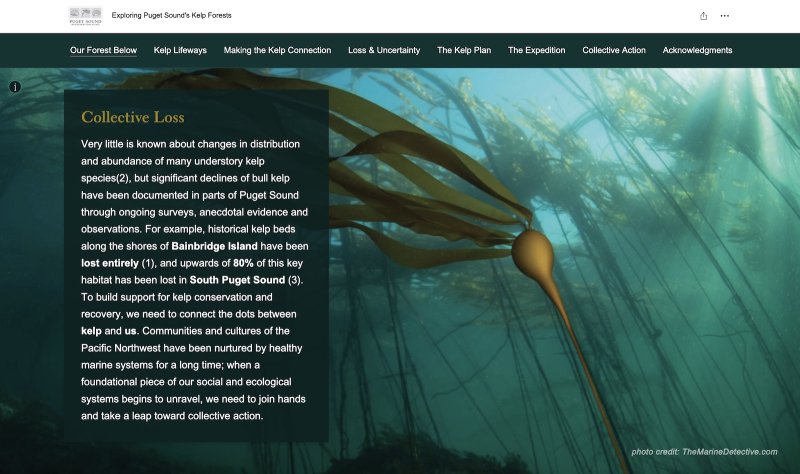
An interactive online story map that illustrates kelp’s importance, how they grow and live, how we are connected, and how Kelp is in decline and why.
Our Education Resources page is your gateway to engaging, hands-on learning about ocean science, conservation, and exploration. Here, you’ll find a curated collection of lesson plans, activities, and research tools designed to bring the wonders of the ocean into classrooms and learning spaces worldwide.
From tracking marine ecosystems and understanding climate change to exploring cutting-edge ocean technology, these resources support educators, students, and ocean enthusiasts alike. Whether you’re an educator looking for curriculum materials, a student diving into marine science, or a curious explorer eager to learn more, these materials will help you connect with the Around the Americas expedition and deepen your understanding of the ocean.
Displaying 21 - 27 of 27
An interactive online story map that illustrates kelp’s importance, how they grow and live, how we are connected, and how Kelp is in decline and why.
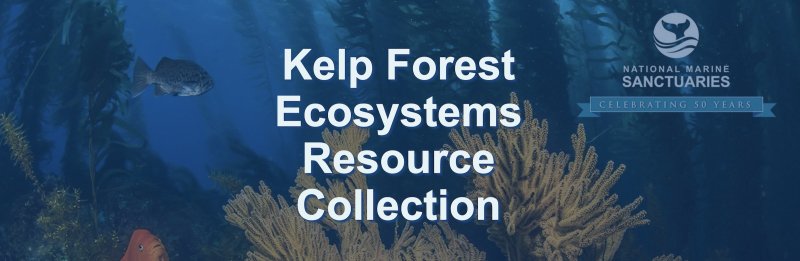
Kelp forests are an important ecosystem that support a variety of species and grow predominantly along the Eastern Pacific Coast, from Alaska and Canada to the waters of Baja, California. Kelp forests can be found in four of our national marine sanctuaries along the West Coast of the United States. This collection has compiled wide-ranging resources from lesson plans, webinars, web stories, virtual reality videos, and more. You are invited to learn more about the importance of Kelp Forest Ecosystems, NOAA’s efforts to manage and conserve them, the species that call these forests home, and the threats kelp face.
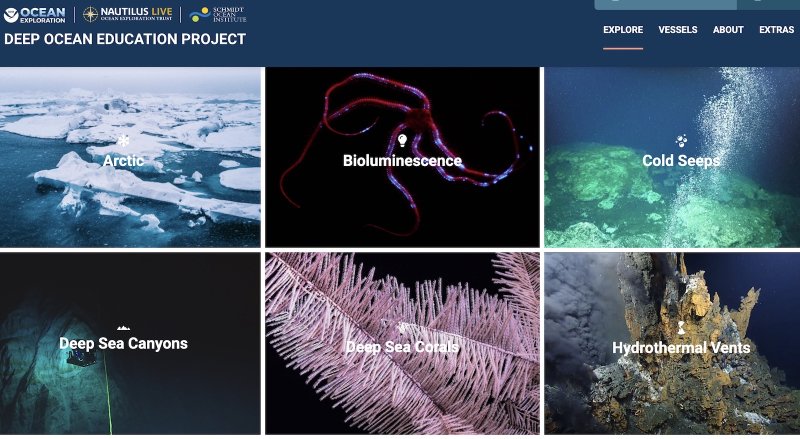
The Deep Ocean Education Project is a resource hub that provides access to ocean exploration-based learning for educators, students, and anyone else interested in learning more about our deep ocean. NOAA Ocean Exploration, Ocean Exploration Trust (OET), and Schmidt Ocean Institute (SOI) are collaborating to share highlights of each organization’s education materials, videos, and other information about the deep ocean in one location.
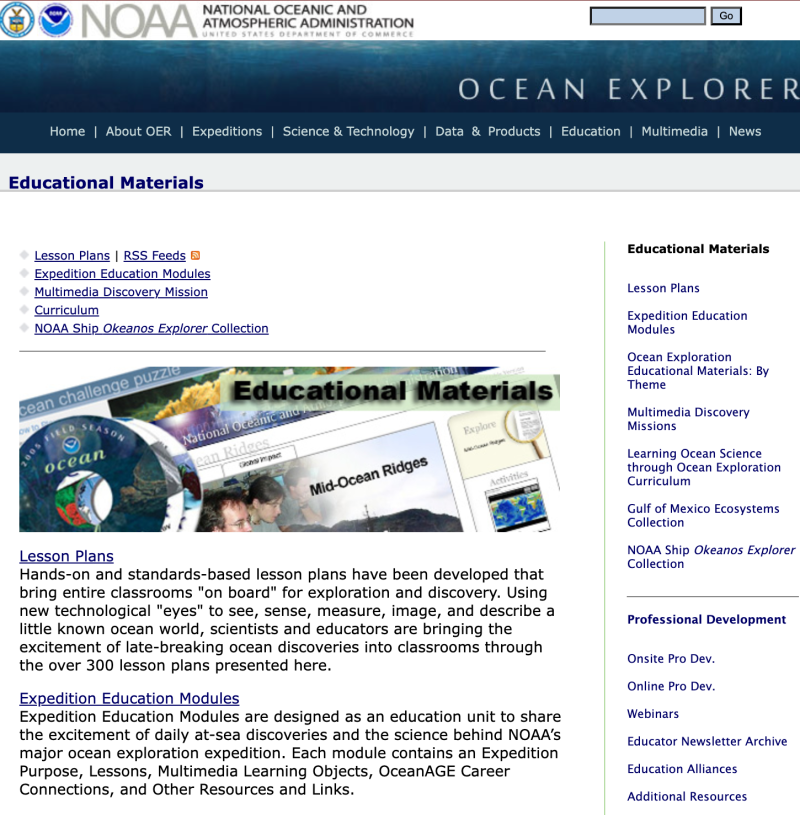
NOAA offers a rich collection of educational resources designed to bring ocean exploration into the classroom. Their lesson plans provide hands-on, standards-based activities that engage students with cutting-edge marine science, incorporating new technologies to study and visualize ocean environments. The Expedition Education Modules immerse learners in the daily discoveries of NOAA’s ocean exploration missions, offering structured units that include lessons, multimedia learning objects, career connections, and additional resources. Similarly, the Multimedia Discovery Missions feature interactive presentations covering deep-sea topics like hydrothermal vent life, chemosynthesis, and marine resources.
Overview: NOC provides a range of materials, including coloring sheets, information sheets on ocean topics, and career profiles focusing on women in engineering.
From our friends at PolarTREC:
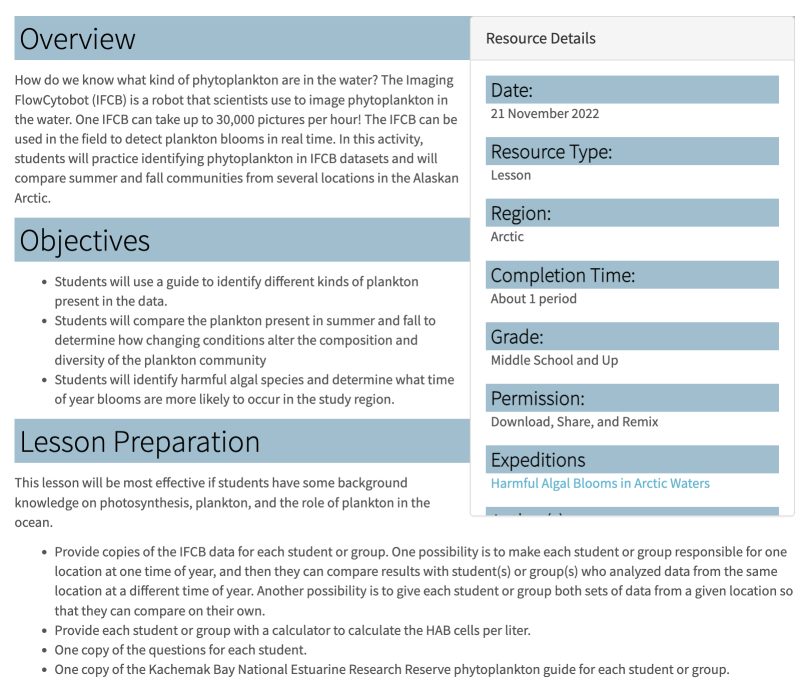
How do we know what kind of phytoplankton are in the water? The Imaging FlowCytobot (IFCB) is a robot that scientists use to image phytoplankton in the water. One IFCB can take up to 30,000 pictures per hour! The IFCB can be used in the field to detect plankton blooms in real time. In this activity, students will practice identifying phytoplankton in IFCB datasets and will compare summer and fall communities from several locations in the Alaskan Arctic.
Check out the expedition page at:
https://www.polartrec.com/expeditions/harmful-algal-blooms-in-arctic-waters
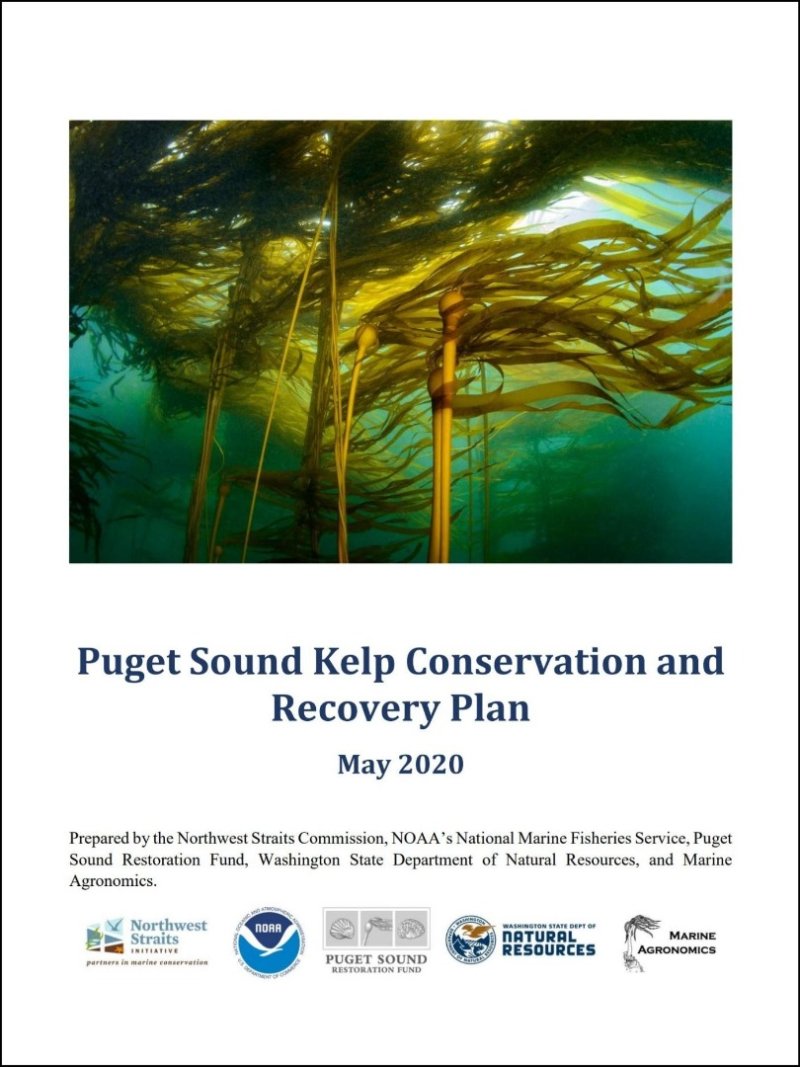
The Kelp Plan is a collaborative tool that provides a research and management framework for coordinated action to improve understanding of kelp forest population changes and declines, while also working to implement and strengthen recovery and protective measures.