 Donate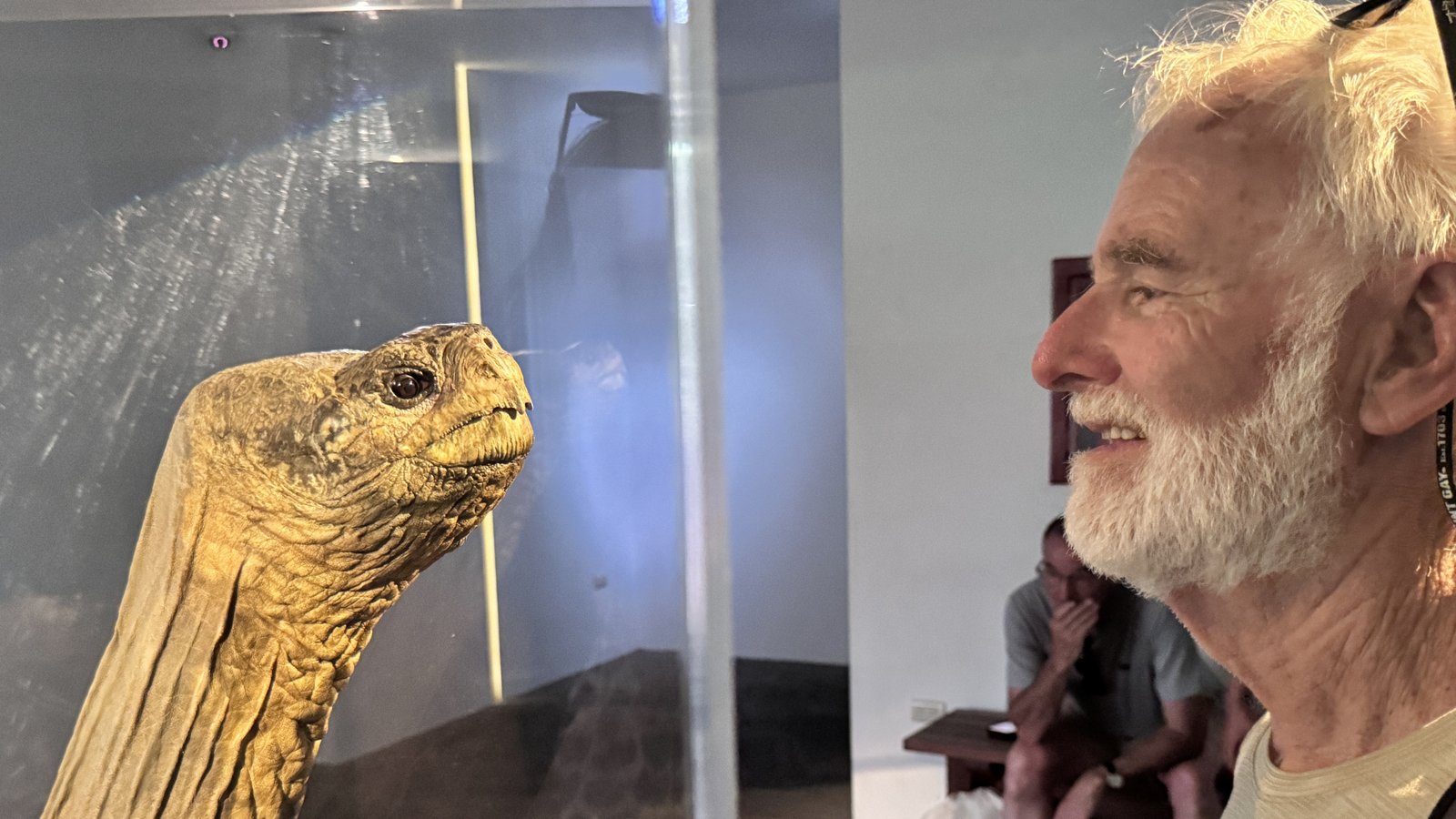
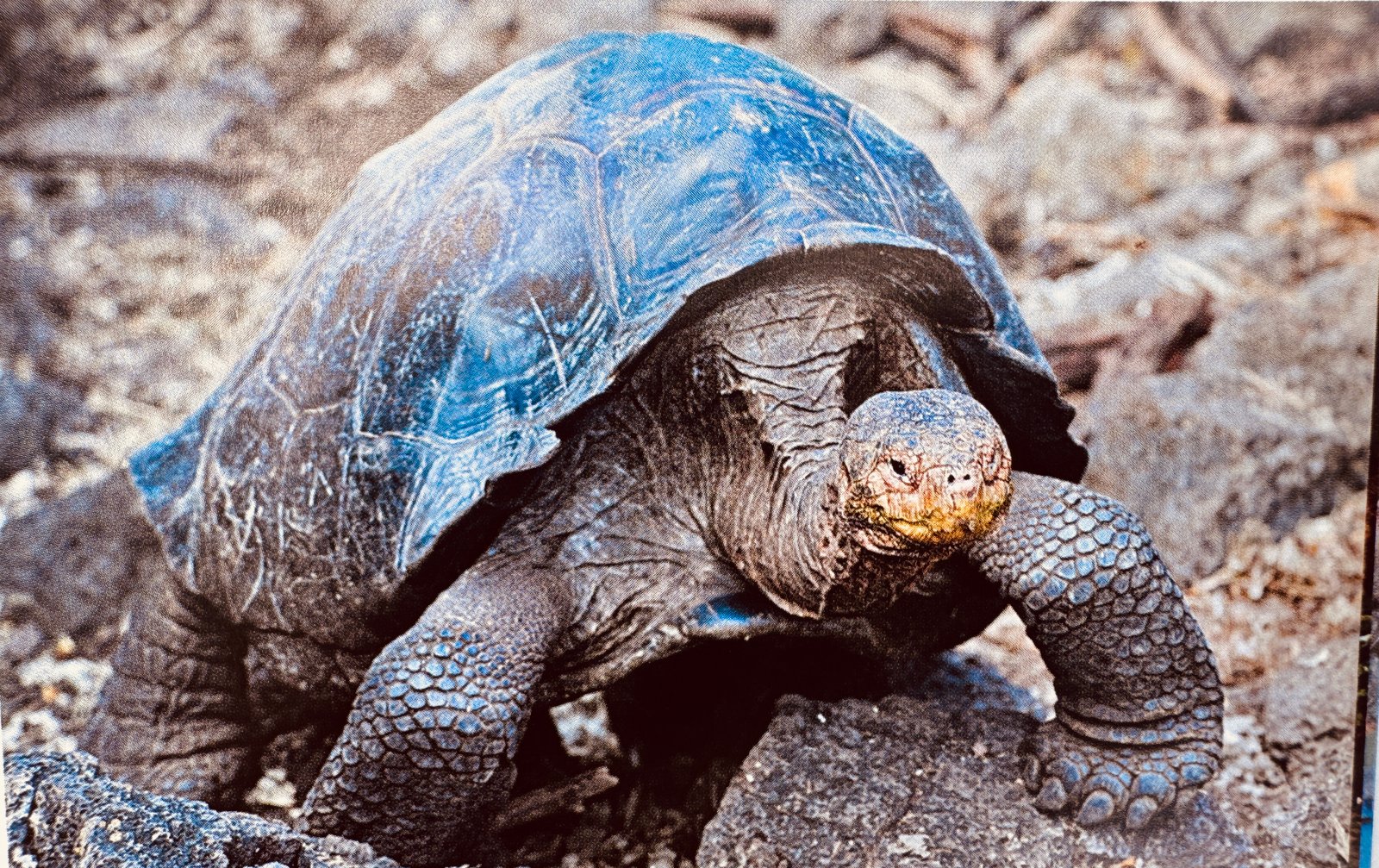
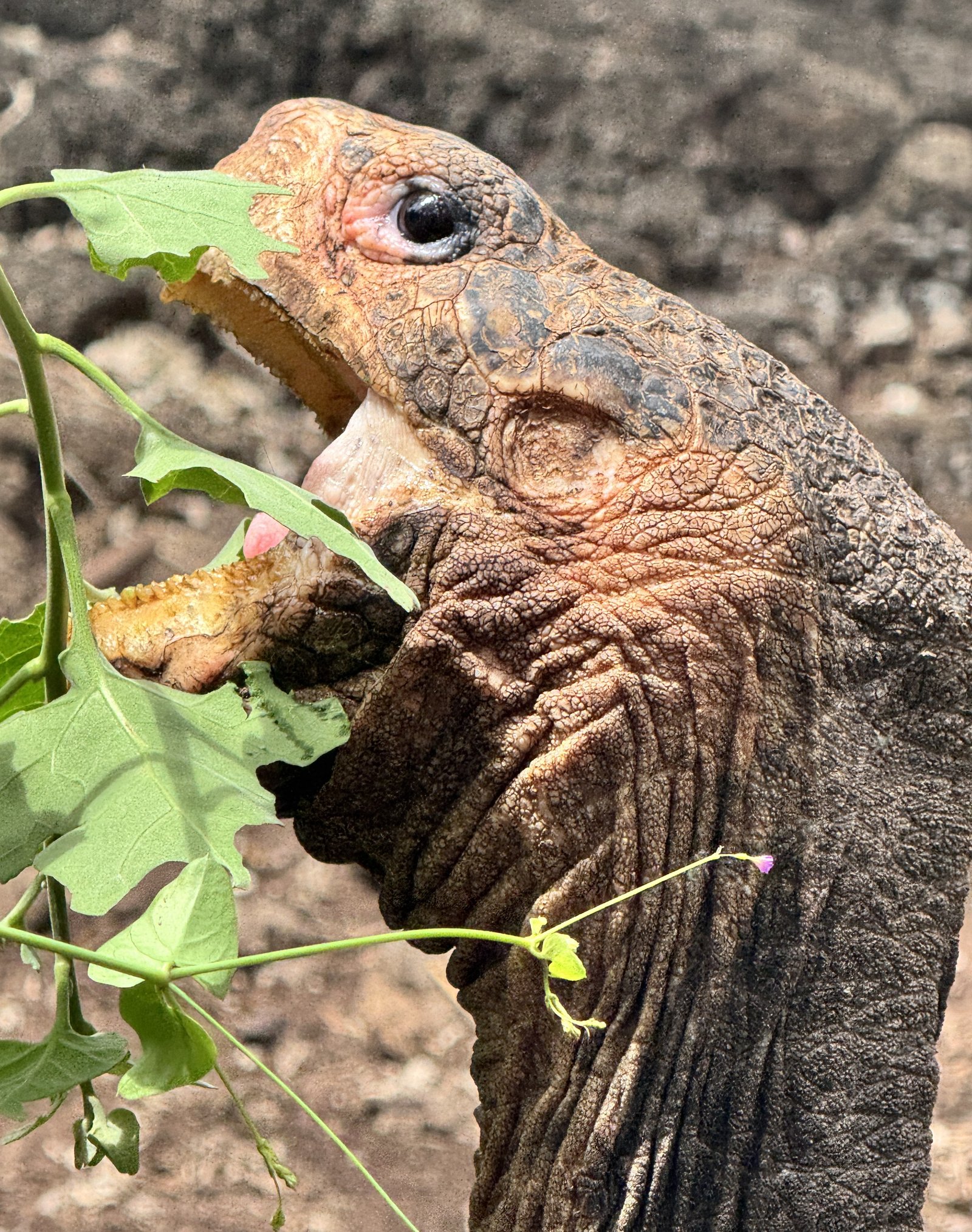
I met George, the oldest living tortoise ambassador, sixteen years ago while visiting the Darwin Center in the Galapagos aboard Ocean Watch in 2010. Stuart Banks, the Director of the Darwin Center informed me that George was also somewhat of an expert on knowing why the Galapagos are called Galapagos, the local language translation for tortoise. George was nearing his 150th birthday and I was nearing my 69th when we met. He seemed willing to let me sit next to him in his spacious yard complete with shade, cooling ponds, beautiful foliage and a convenient sitting stump for me to use while sharing his space.
I remember the day being extremely humid and hot, conditions which seemed just fine with George. Happy to have some quiet time away from the boat and a very busy town I occupied the convenient stump. I sat while he watched. Eyes wide open, no blinking and just a hint of a smile. Slowly he stretched his impressively long neck slowly toward me until we were separated by less than an arm length. For a couple of hours I sat and he watched. No nibbles (grass eater, no teeth), no pushes or moves, just watching. In what seemed to me like minutes, two hours evaporated while we stared at each other. I shared a few stories with him, told him about our sailing experiences and my Nebraska growing-up years. And then I thanked him for listening and said goodbye. It truly was one of the best accidental Zen experiences of my life. I didn’t expect to ever see George again, I’m guessing he felt the same about me although for him time might have had a totally different definition.
In our book One Island, One Ocean about the 2009–2010 Around the Americas voyage, written by Herb McCormick with photographs by David Thoresen, Herb shared his observations from his first visit to the Galápagos in the late 1990s: "I'd visited the Galápagos for the first time more than 15 years earlier and was struck by how rigorous the rules and regulations had been for private vessels. Provisions imposed on cruising sailors by the Ecuadorian government were extreme," leading him to conclude, "This place is pristine."
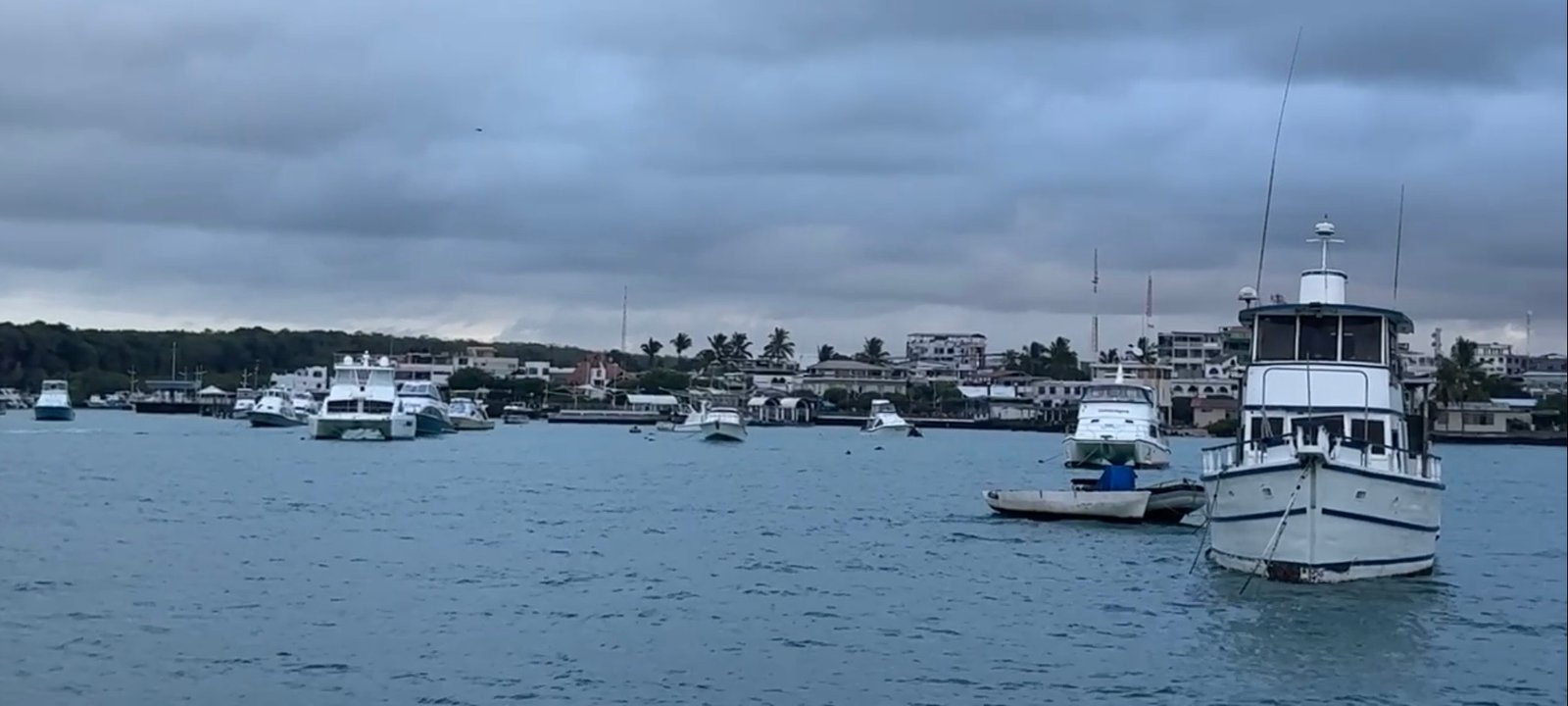
However, by 2010 major increases in charter boats, private boats and cruise ships changed the harbor, the town and the island environment in noticeable ways. Puerto Ayora is the designated arrival and ‘check-in’ town for all visitors, whether by boat or plane. The anchorage was crowded and the town busier than we anticipated. In the 1960’s 4,000 people inhabited Puerto Ayora. Tourist numbers approached 160,000 by 2010. Growth has continued at something close to 14% a year.
That kind of stress would challenge any community but is particularly challenging for a place committed to protecting its fragile and ‘pristine’ eco-systems while at the same time committed to sharing the history and beauty of the place. Today conditions for visiting boats and people, coupled with serious enforcement oversight will greet all visitors regardless of their method of travel. Small cruise ships make daily deposits of adventure seeking tourists and shoppers. Private boats sailing in from different oceans of the world add to the crowded anchorage in Puerto Ayora. Water taxis zip around carrying explorers to different parts of the town. The main street is a 'tee-shirt and trinket' boulevard with busy open air restaurants serving global food choices. The lights, stores and vibrance well into the night make the town seem much larger than it actually is. Lots of tourists, lots of merchandise with bars and cafes everywhere.
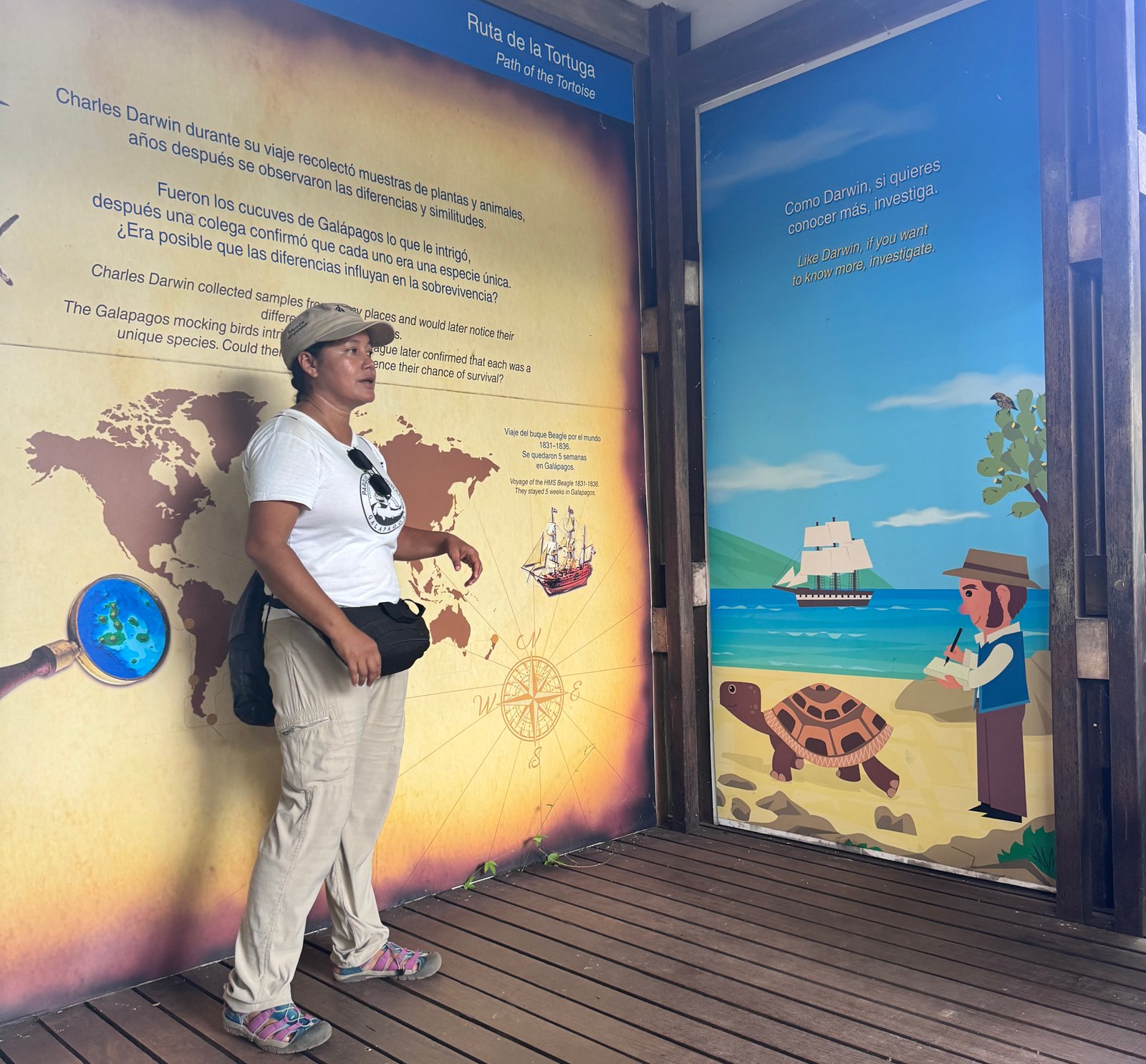
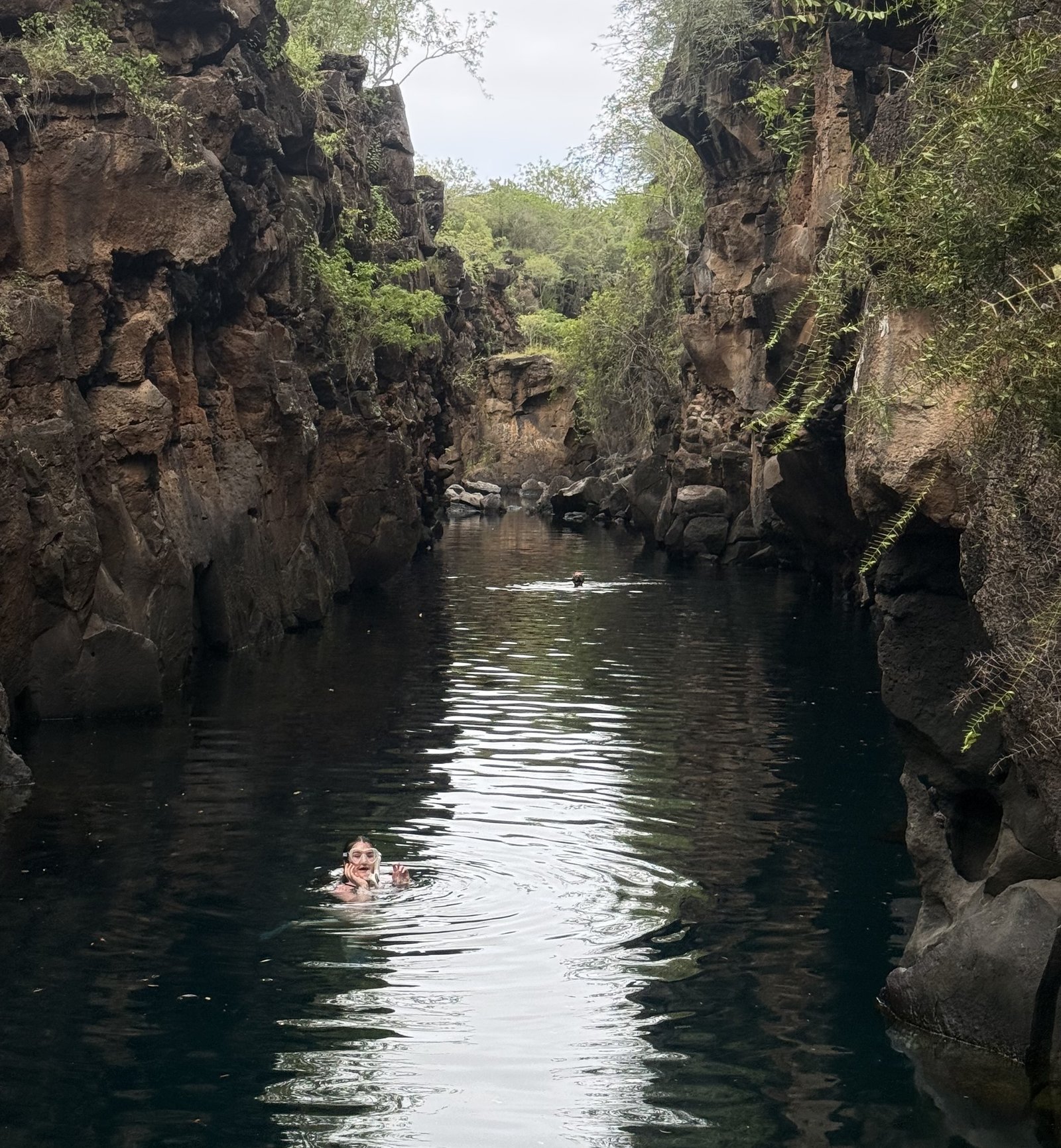
Shortly after One Ocean's arrival the crew took advantage of a guided dive experience. Grace, Jenn, Tess and Steve experienced the 'up close and personal' underwater environment. After that, a snorkel experience through amazing volcanic rock channels added to the 'timeless' feeling of the islands. All of these excursions were 'guided' tours, staffed by knowledgeable, friendly and helpful locals who helped us at every turn. They take their job of protecting the environment while educating the visitors very seriously.
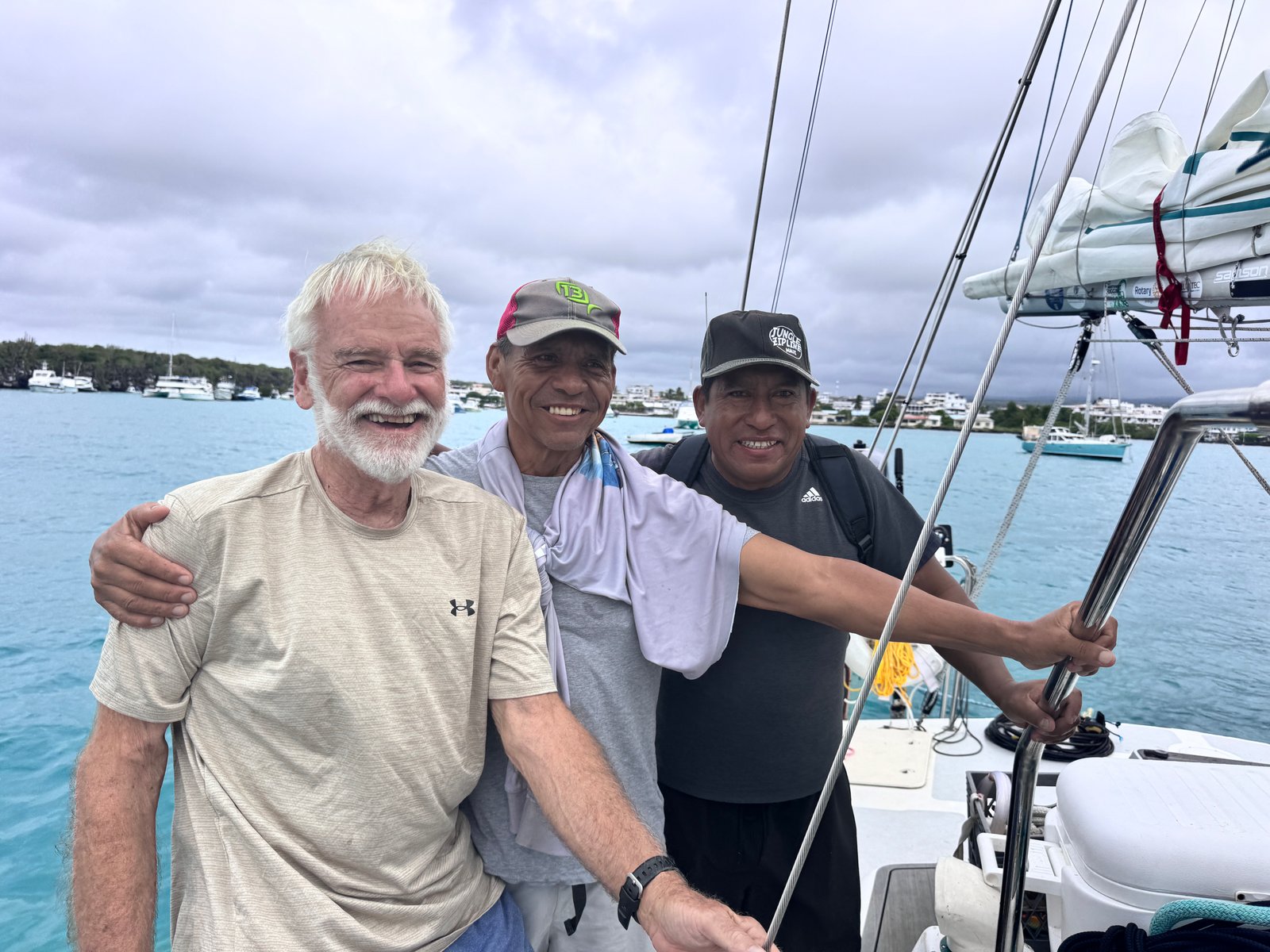
Unfortunately, we were not immune to whatever virus was lurking in the air or in the food. One by one each of us experienced a couple of very unpleasant and uncomfortable days, guessing we caught some kind of 'cruise ship' virus circulating in the air. Whoever felt the best took care of the boat, shopped for groceries or worked on the long list of things to do before setting out on the longest leg of the voyage, some 3,900 non-stop nautical miles to Hilo, Hawaii. Guest crew/volunteer, Steve Quinn, was first to recover and steered the rest of us through the uncomfortable process while locating things and services in town to help us prepare for our departure.
As tourism pressure collides with the realities of economic growth, the challenges of enforcing regulations within a large marine protected area presents enormous challenges for the islands, the people, the protected species and the government. Preservation of the 'pristine' environment is at risk. We can only hope that the next 150 years are as good as George's last 150 years and that his living relatives and friends continue to thrive in a healthy environment. Along with the ocean, they will need our collective education, support and focus.
The challenges of balancing economic growth with environmental stewardship becomes even more difficult. The Galapagos remains one of the world's most extraordinary places. Protecting it will require constant attention, thoughtful management and a shared commitment from every visitor. Nobody gets a 'pass' from stringent requirements relating to environmental protection. One Ocean had her bottom cleaned/scrubbed in Chile two weeks prior to our arrival. Unfortunately during the crossing growth occurred that might have included some invasive species hitchhiking on a convenient platform. Immediately on our arrival the bottom was inspected and judged not clean enough. Divers were hired and we were directed to exit the Marine Protected Area (130nm one way!) and not return until the divers thoroughly cleaned our vessel. Time, money, effort and good intentions met protection regulations head-on, so off we went and returned with an acceptably clean bottom for One Ocean.
Galapagos George reminded me that conservation is ultimately about perspective. His lifetime spanned generations of change, yet his quiet presence continued to inspire people to care about a place unlike any other. We can only hope his living relatives, and the countless species that make these islands so remarkable, will still be thriving 150 years from now. Like the ocean itself, they will need our collective education, stewardship and care.
George stepped off the planet a few years after we met. After his death his remains were carefully preserved by expert taxidermists in New York before being returned to the Darwin Research Station where he continues to greet and educate visitors about the 'his' Galapagos and the importance of conservation. George will forever be 150 years old. I'm now 79. He still looks pretty good!