
The Humboldt Current is a cold, low-salinity ocean current that flows north from the southern tip of South America along the continent’s western edge toward the equator. It is part of the South Pacific Gyre—the largest of Earth’s five major rotating subtropical ocean current systems. This counterclockwise gyre is primarily driven by wind patterns and Earth’s rotation, with the equator marking its northern boundary.
As the One Ocean crew sails south toward Chile along South America’s west coast, we continuously evaluate wind, weather, and ocean currents to determine the safest and most efficient route. Recently, we’ve been keeping a close eye on the Humboldt Current, which has played a significant role in our decision-making. At times, its flow has opposed our forward progress by as much as 1.5 knots, encouraging us to stay closer to shore to avoid it. That choice, however, led us into another dilemma.
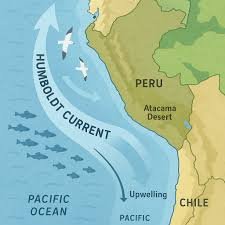
The Humboldt Current drives one of the most productive marine ecosystems on the planet—an ecosystem that attracts intense fishing and squidding activity, something we’ve become very familiar with- but I won’t get too caught up in that right now.
According to The Nature Conservancy, the Humboldt Current supports approximately 15% of the global fish catch, making it a cornerstone of global food security. It is often described as a “marine highway,” used by countless species—fish, seabirds, marine mammals, and turtles—as both a feeding ground and migration corridor.
The engine behind this extraordinary productivity is a process called upwelling. Trade winds push warm surface waters westward, allowing cold, nutrient-rich water from the deep ocean to rise to the surface. This influx of nutrients fuels plankton growth, forming the base of a highly productive food web. When upwelling weakens, surface waters warm, plankton populations decline, and the entire ecosystem begins to unravel.
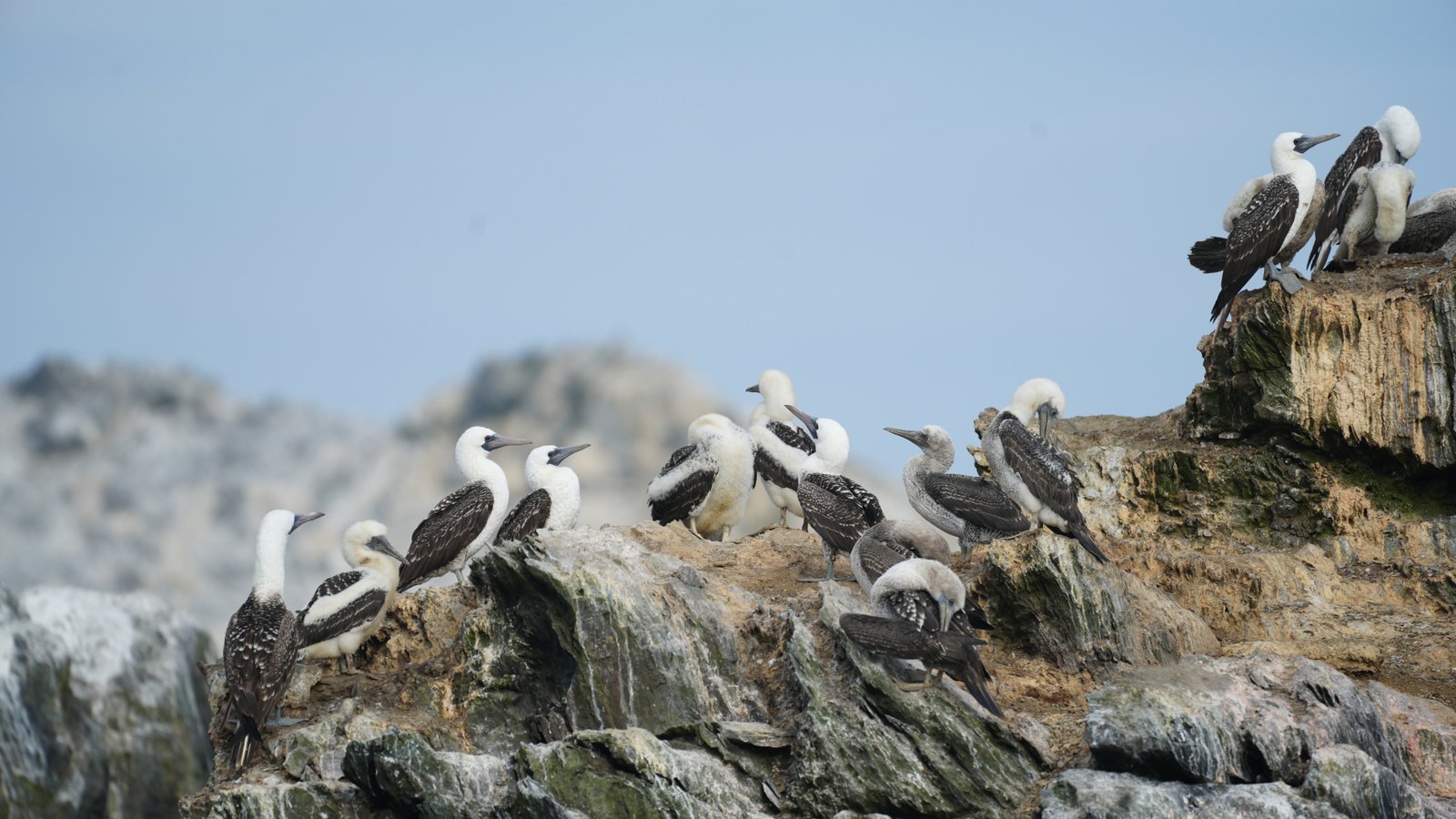
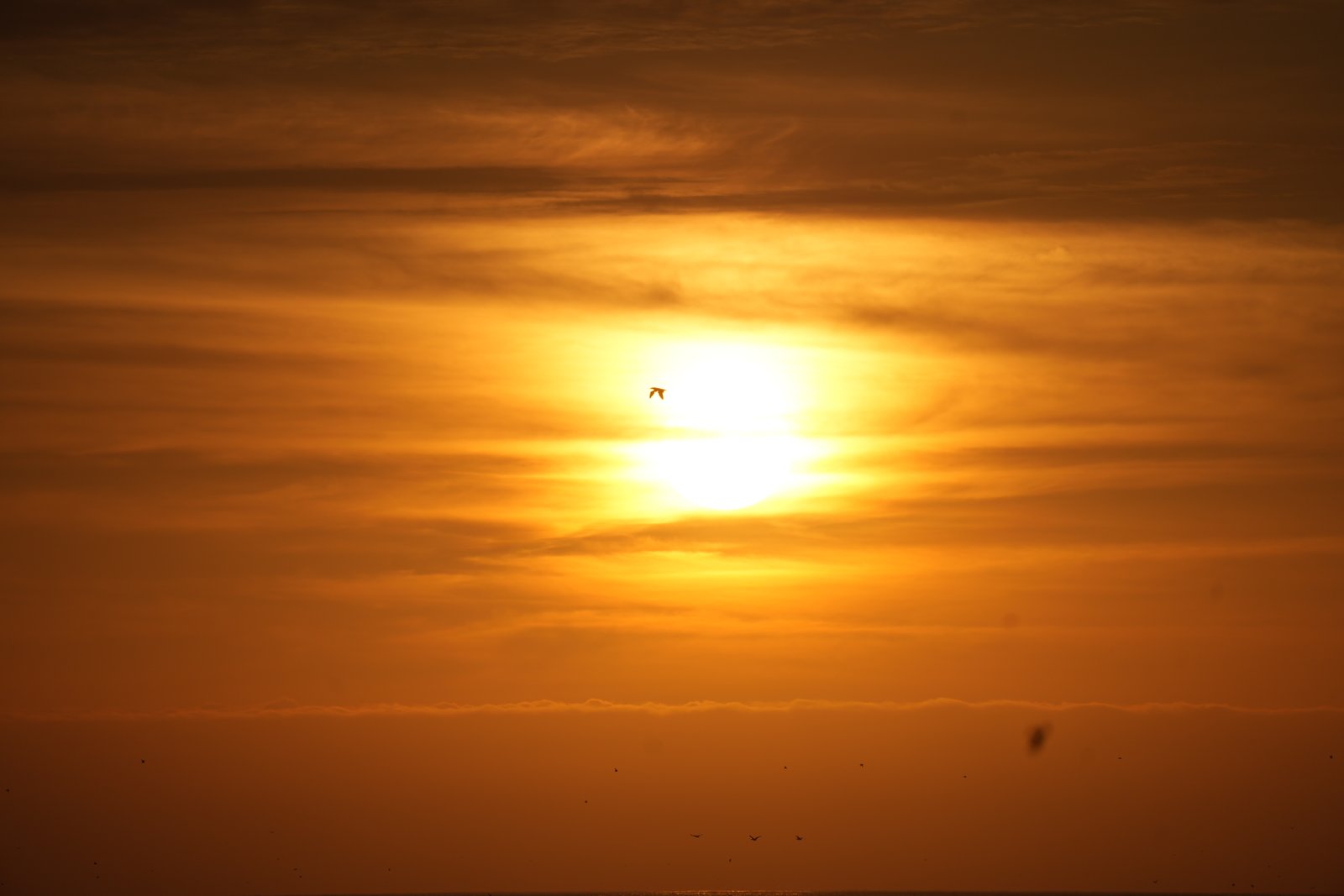
One of the most immediate and striking changes we noticed upon entering the Humboldt Current was the sudden explosion of life. To put it into perspective: during our seven-day Atlantic passage from Bermuda to Puerto Rico, we saw only a few seabirds over the final hundred miles. In contrast, during our first seven days sailing south in the Pacific, we encountered thousands of seabirds of various species—many of them boobies—several of which happily caught rides on One Ocean’s bow.
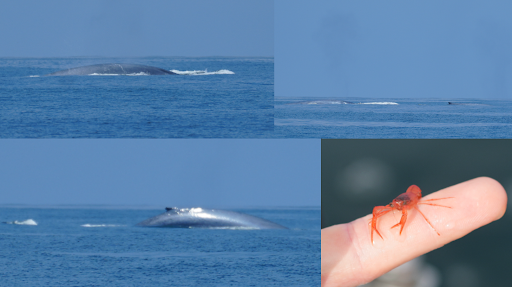
The abundance didn’t stop there. Tuna leapt around the boat. Hundreds of dolphins surged past our hull. Rays launched themselves several feet out of the water, slapping back down onto the ocean’s surface. Turtles drifted by, often mistaken at first glance for buoys or rocks. We also encountered numerous whale species, including hundreds of short-finned pilot whales, a blue whale, and many more that Grace will help us identify in the future. This dramatic shift in biodiversity was something the entire crew was thrilled to witness.
So why are these waters so much livelier than what we experienced in the Atlantic and Caribbean? The answer lies in the Humboldt Current’s role in upwelling—one of the most important oceanographic processes on Earth.
Beyond its ecological significance, the Humboldt Current also plays a critical role in climate regulation. By cooling coastal regions, it reduces precipitation and helps shape the arid climates of Peru and northern Chile. However, this system is highly sensitive to climate-driven changes. Warming surface waters can disrupt circulation and weaken upwelling, while overexploitation of fisheries further compounds these threats. Sailing through this region, we have become acutely aware of the intensity of fishing and squidding activity that depends on these waters.
Protecting ecosystems like the Humboldt Current is essential and over exploitation poses a huge threat. Sustainable fishing practices and the establishment of Marine Protected Areas (MPAs) are critical for allowing fish populations to recover, safeguarding biodiversity, and supporting the coastal communities that rely on these resources. Global food security is deeply tied to the continued productivity of regions like this, making conservation not just a local responsibility, but a global one.
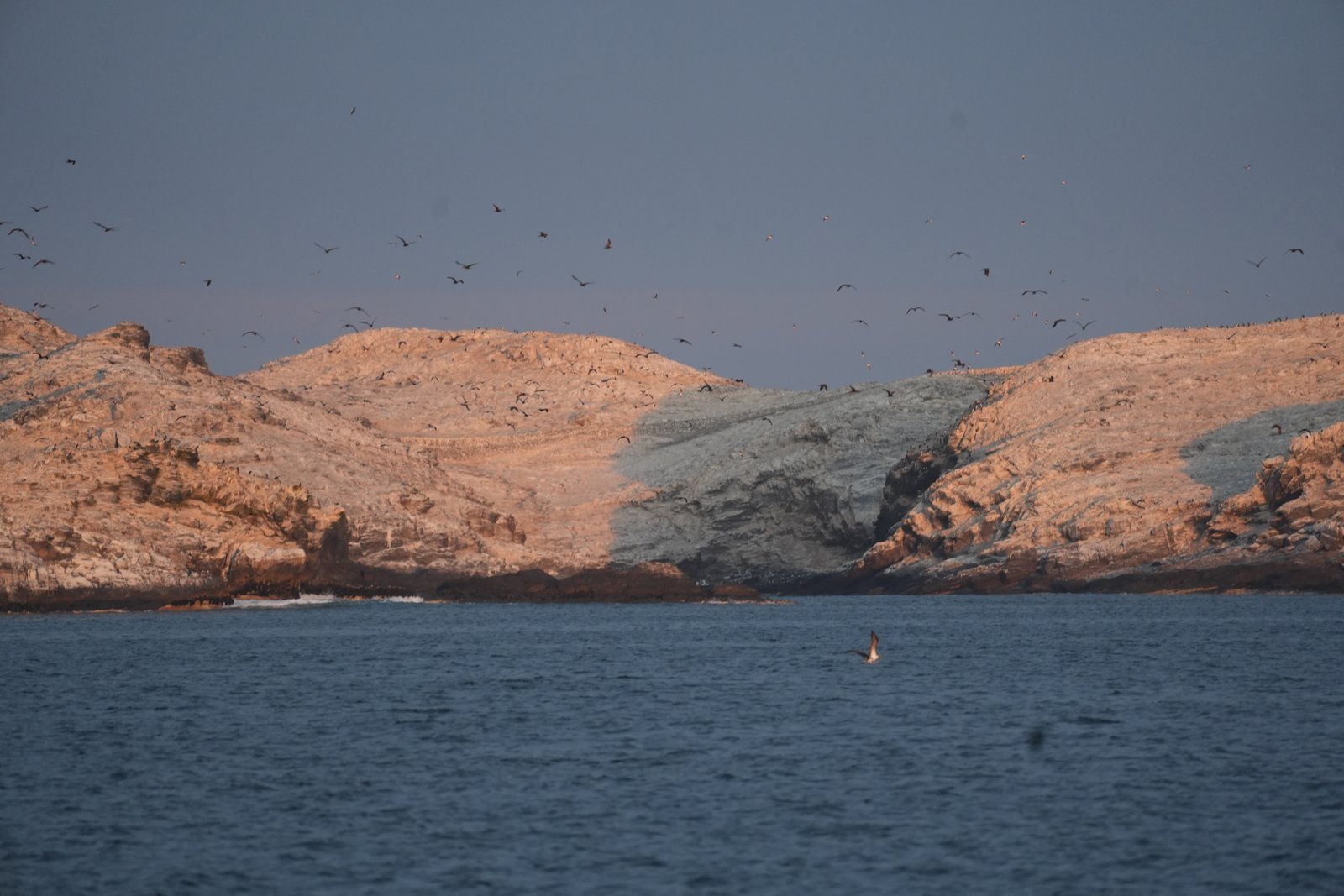
Shortly after passing the most western point of South America, we decided to anchor for the night at a Nature reserve and MPA just off the coast- Isla Lobos de Afuera. We arrived at the lunar-looking island just after sunset. The land was low, rocky, stark white and barren. This reminded us of our time in the Arctic, but in this case, the white rocks were a result of the birds who call this place home- completely blanketed in guano. As we approached, the ocean erupted with life: tuna crabs filled the water, fish broke the surface, birds darkened the horizon, and Peruvian sea lions followed our wake through the waves. Experiencing the Humboldt Current firsthand has reinforced just how interconnected ocean systems, climate, and life truly are.
It is a privilege to witness the abundance the ocean can sustain—and a powerful reminder of our responsibility not only to study and measure these ecosystems, but to protect them, educate future generations, and ensure that places like the Humboldt Current continue to thrive.
-Tess