
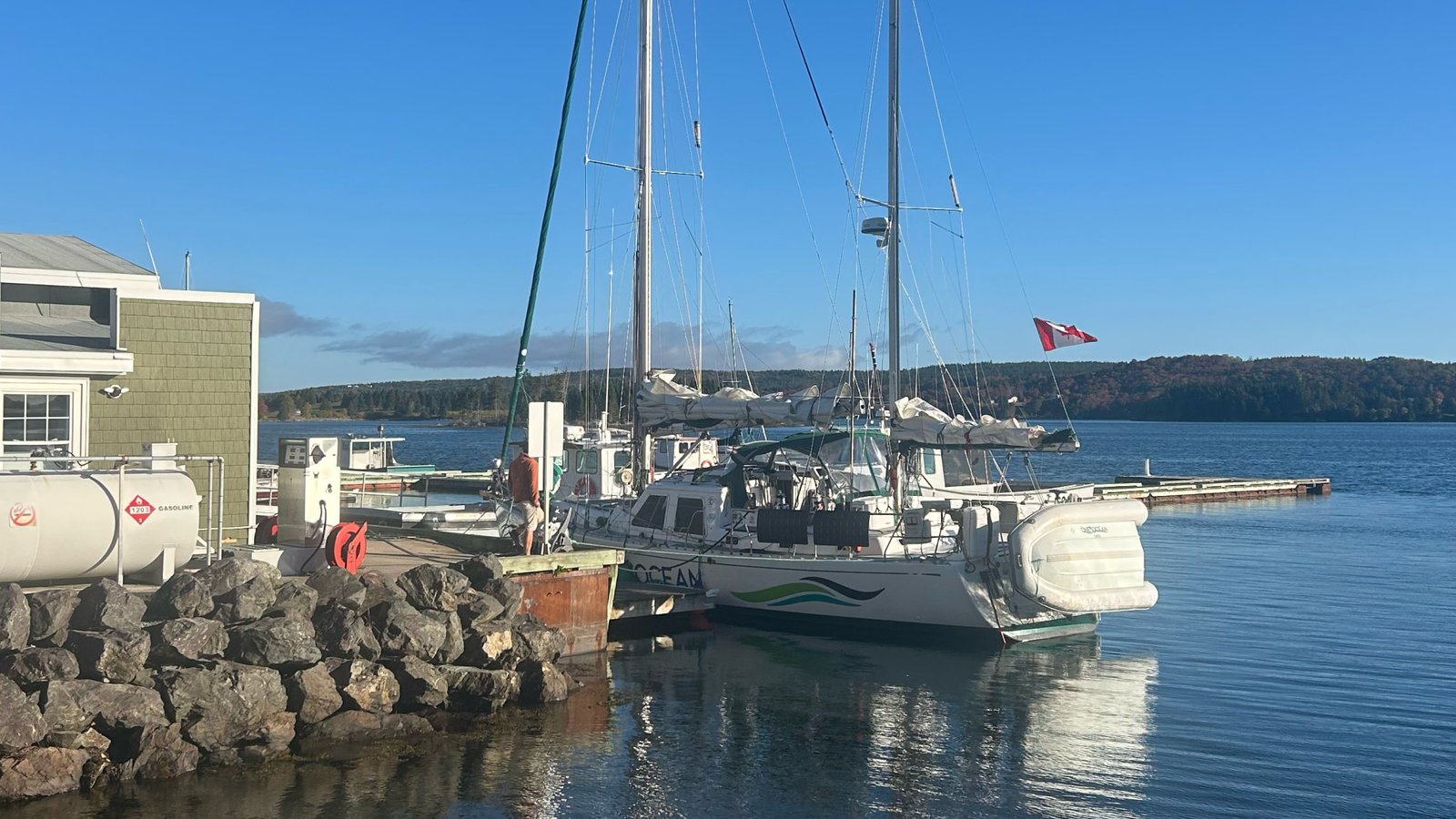
As I started this engineering report, we were docked in beautiful Nova Scotia at the Royal Nova Scotia Yacht Squadron. From the moment we arrived, we were met with such warmth and kindness that I almost forgot we were in a foreign port — these folks made it feel like home. The onboard engineer (that’s me) was also relieved to finally be somewhere with hardware stores, marine suppliers, and coffee shops all within walking distance. Civilization!
Originally, I was planning to step off in Newport, but weather and schedules had other ideas. Volunteer Charley offered to meet the boat in Halifax, so we made a plan — and suddenly, I found myself with airline tickets in hand and a new mission: head to Michigan for a quick visit. There was just one small problem… I didn’t own a suitcase.
When I moved aboard One Ocean back in May, I simply rolled a dock cart of clothes over from my boat two docks away. No luggage required. So, before heading to the airport, I made a stop at the nearest store and rejoined the ranks of travelers with proper baggage.
A quick hop to Michigan let me spend a wonderful weekend with family, then I drove to Newport to collect care packages and supplies we’d shipped ahead. The next plan (and I use that word loosely) was to continue down to Annapolis to visit my girlfriend, then on to Charleston, SC. But in true sailing fashion, plans changed faster than the wind — the crew decided to skip the East Coast altogether and head straight for Bermuda. Perfect! Flexibility when on a voyage of this scale is a must.
So, I changed the rental car drop-off to Baltimore, booked a flight to Bermuda, and squeezed in some last-minute shopping for boat parts in Annapolis. That next chapter — the Bermuda prep and crossing — will be in the next Engineer’s Log. For now, here’s how we wrapped up our Nova Scotia stay.
Convenience & Plenty of Everything
It felt like paradise: easy access to fuel, food, oil, and supplies, all within a short walk. The marina had a coffee hut, restaurant, bar, and a local art venue right at the top of the dock. Add sunshine, friendly locals, and good walking trails, and I was ready to nominate Nova Scotia for “Best Port Stop of the Year.”
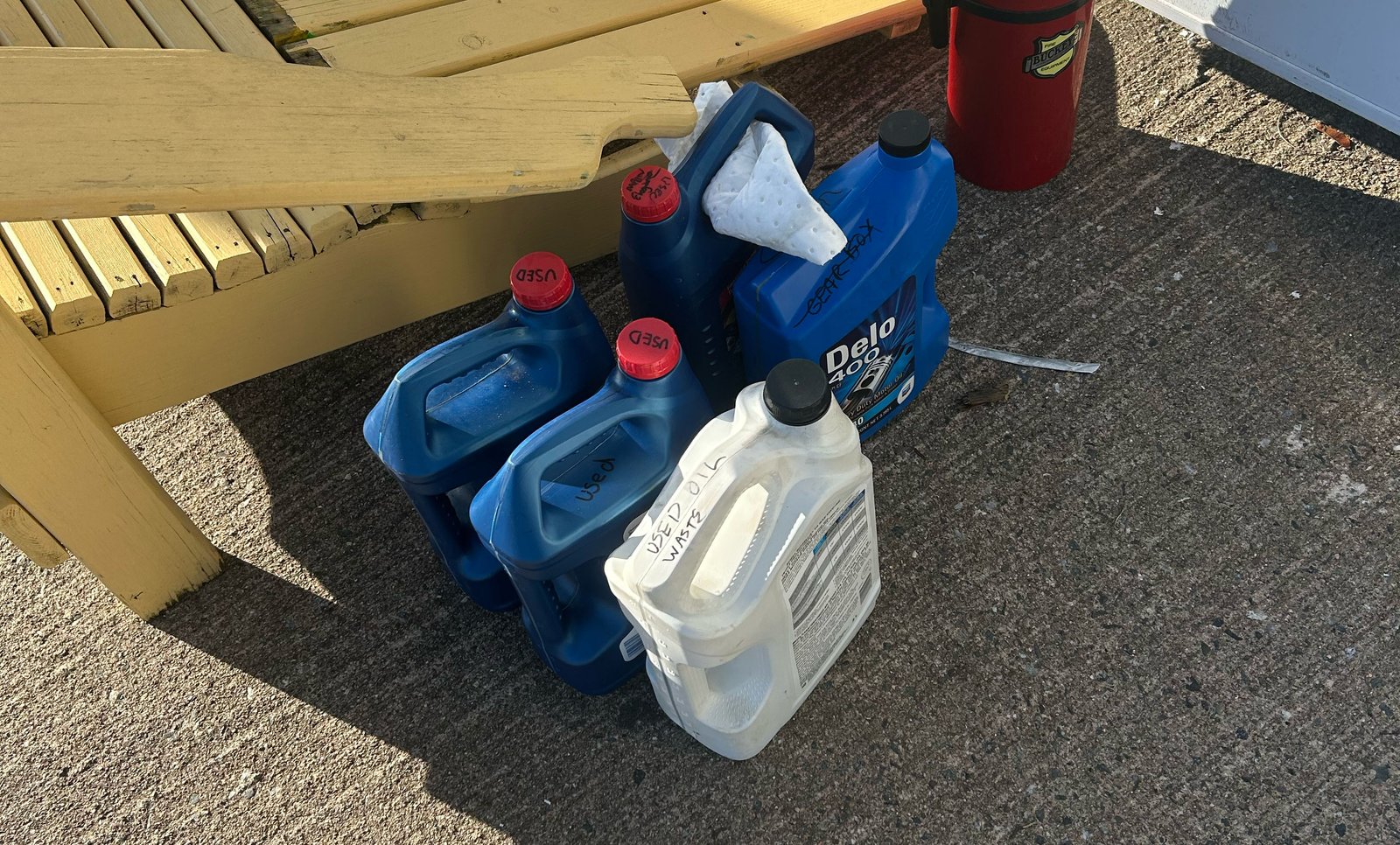
The marina manager even took five gallons of used oil off our hands — tossed it right in his truck to recycle it. That’s what I call small-town kindness.
Diesel Fuel
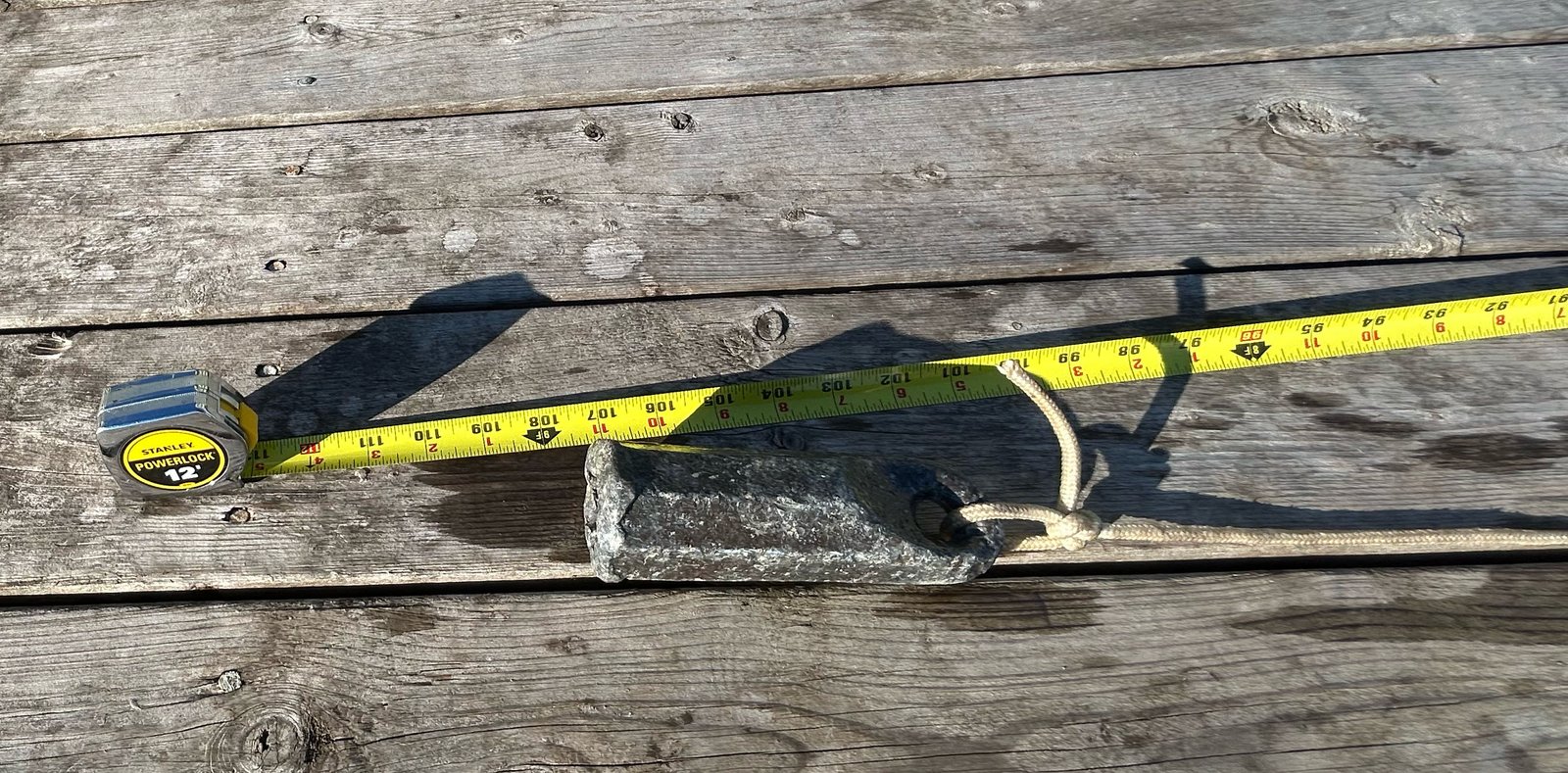
After a great stay, we planned to fuel up Saturday morning at 8:30 AM. The dockhands assured us it was “plenty deep” — the same line every boater hears before things get interesting. Out came Mark’s handy-dandy lead line (its second appearance this trip).
Turns out they were right — barely. At low tide, we’d have about 12 inches under the keel, so timing would be key. Luckily, the tide was high, the wind behaved, and we fueled up with ease.
This was our first stop where we could simply pull up to a dock and use a normal fuel hose — no custom truck or pump gymnastics required. We took on 752 liters (just shy of 200 gallons), topped off all three tanks, and celebrated with an amazing French toast brunch with Annabel before heading out.
Care Package
With my departure approaching, I wanted to make sure One Ocean was in great shape for the next leg. I’d been coordinating with the Marine Technology Center to source spare parts and upgrades, and Charlie packed all this in his suitcase. He brought:
- Replacement Anchor Markers
- Victron Bluetooth Voltage Meter (Bow Thruster Battery)
- Spare Propane Control System (unit, sniffer, valve, wiring)
- Water Witch Float Switch
- Hynautics Control Head
- 1.5” Sanitation Tee
- Two 12V Power Outlet Ends
That should keep the ship’s systems humming nicely for a while.
Maintenance
While we were holed up in Lark Harbour (Newfoundland) we kicked off our maintenance - it helped keep us busy while waiting on wind. I’d been building this list all through the Northwest Passage, just waiting for a the correct moment to dig in before the next big leg — Nova Scotia to East Coast USA to Puerto Rico, then onward to South America.
We started with the generator: fresh oil and filter. During that job, we found the aft bilge pump wasn’t working. Power issue, maybe? After some fuse checking and head scratching, I remembered MTC student George’s solid installation of the new Rule pump — wired to existing power with a toggle switch. The mystery was solved when I discovered the aft bilge pump breaker had been accidentally turned off. The helm chair and breaker panel are too close together — the marine equivalent of “fat fingers.” Flipped it back on and just like that — working again!
We greased the anchor winch, it has had a fair amount of use and every month we give it a squirt of grease – even if we haven’t been using it. Why? Because the bow does take a fair amount of salt water when doing passages and we don’t want any of that getting into the anchor winch!
Once we arrived in Nova Scotia we continued our maintenance marathon. We tackled the Yanmar main engine for its 1000-hour mark, and changed the raw water impeller. Then I ran the crew through a hands-on lesson in fuel filter replacement. After 1000+ hours, the filter looked clean — a good sign that our tanks are in great shape. The crew nailed the procedure and can now handle filter swaps anywhere, anytime.
We also had a diver replace the anode on our Max Prop and give the bottom a good look-over. Report was good – we have a few bumps and bruises from the NW Passage, but a passing report.
Things Working Well
One Ocean – that’s all I got to say. Words are not enough but the crew said she was put in terrible conditions and really hit hard but she did what we all believed she could do – stay together, take care of the crew, and bring all onboard safely into the next safe harbor!
What’s Next
We enjoyed our Nova Scotia stops, and I “jumped ship” in Halifax — but not for long. Next up: meeting the crew in Bermuda, prepping for the next passage, and writing the next log.
Life is good.
Cheers,
Mike