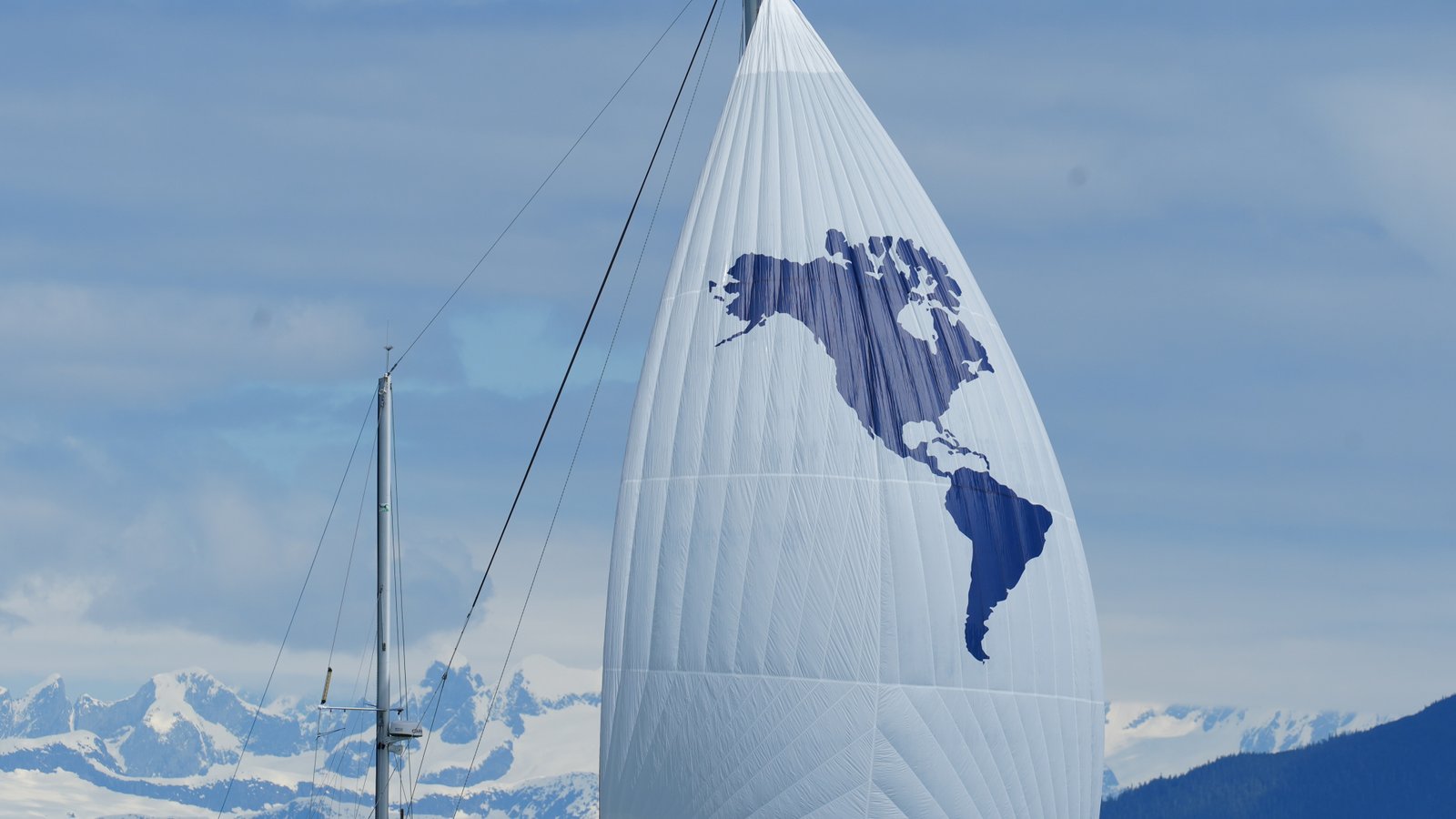
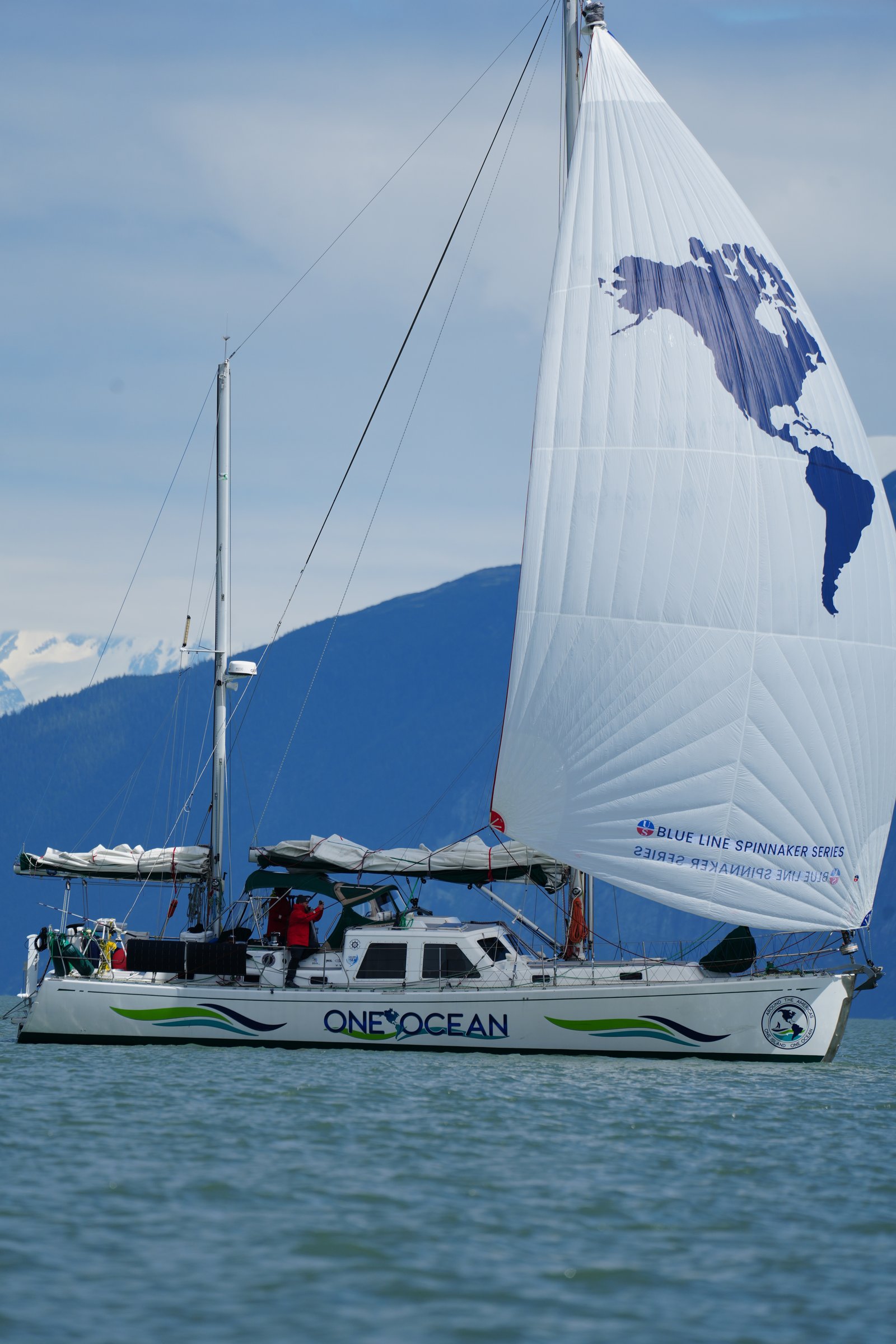
As we come to the end of the physical journey of Around the Americas, though not the research or the education, there is a big question we have to ask. What has changed since the last voyage, back in 2009 and 2010? It is a question we have carried with us since the very beginning of this trip. Along the way we have seen and heard some extraordinary stories, from the people we met in port, from Captain Mark Schrader and Dave Logan, and from our own time at sea. Here I want to look more closely at the technical and statistical side of that question, and see just how much our ocean has changed in fifteen years.
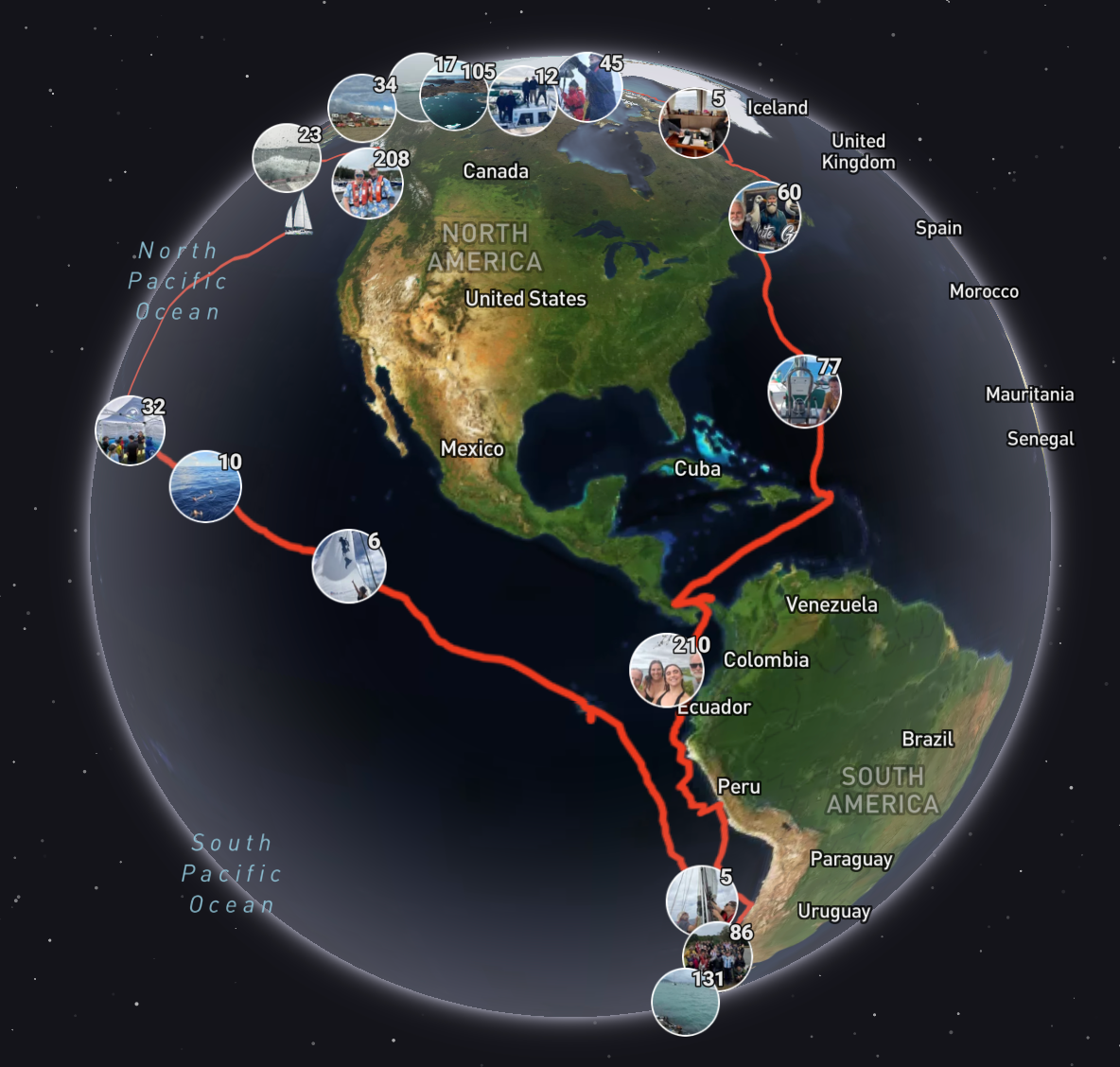
When Captain Schrader first made this trip, he came home with a warning. The ocean was changing. Fifteen years later we have retraced his route aboard One Ocean, sailing through the Northwest Passage, down two continents, around the bottom of South America, and back up the Pacific through the Galápagos and Hawaii. The water is the same water, but it is not the same ocean. There is one force behind almost everything we saw on this voyage, and it is human activity. Here is what has changed, told through the things we saw along the way.
A warmer sea
We felt it in our own data. Our instruments log the temperature of the sea surface and the heat passing between the ocean and the air, and the readings keep climbing. Some of them were startling. In the Northwest Passage, water that should sit close to freezing reached as high as 63 degrees Fahrenheit, and on the leg from Halifax to Bermuda the surface climbed to above 80 degrees Fahrenheit. That warmth was not ours alone to witness. The North Atlantic we crossed had its hottest year on record in 2024, its surface averaging 22.9 degrees Celsius, close to 73 Fahrenheit, the warmest ever measured for that ocean, and the world's ocean surface set its own record that year at about 20.9 degrees Celsius, near 70 Fahrenheit.
All of it is part of a much larger pattern. 2024 became the warmest year ever measured, the first time the planet ran more than 1.5 degrees Celsius hotter than it was before the industrial age. Most of that heat ends up in the water we sailed through, and the ocean has broken its own heat record every single year since 2019. 2025 kept the streak alive. At the surface it ranked only third warmest, held back a little by a La Niña, and yet the ocean still stored more heat than in any year ever recorded, absorbing about 39 times more energy than all of humanity used that year. The full accounting of 2026 will not be done until the year is out, but it begins on the back of the warmest ocean ever measured. Put the two voyages side by side and the change is stark. When Schrader sailed around 2010, the world sat roughly 1 degree Celsius above pre-industrial levels. It has since passed 1.5, which means the planet warmed by close to half a degree in just the fifteen years between his trip and ours. The sea is warmer now than at any point in human history, and it is holding on to more heat than it ever has.
Reefs bleaching over and over
The clearest fifteen-year marker is written on the coral. When Schrader passed through in 2010, the world was in its second global bleaching event, which hit about 37% of the world's reefs. We are arriving home just after the fourth, which ran from 2023 to 2025 and was the largest ever recorded, striking 84% of reefs worldwide. Each of the four global events has been worse than the last, climbing from 21% of reefs in 1998 to 68% between 2014 and 2017. Bleaching happens when the water grows too warm and the coral expels the tiny algae, zooxanthellae, that feed it and give it color, leaving it pale and starving. The reefs we passed in Hawaii have been hit hard three times since 2014.
There is a second, invisible blow. The same carbon dioxide that warms the planet is soaking into the sea and turning it acidic, now about 30% more so than before the industrial age, which strips out the carbonate that corals, shellfish, and plankton need to build their shells. In 2025, scientists confirmed the ocean had crossed a safety threshold for acidity that it had not crossed when Schrader first sailed. Such a threshold is called a planetary boundary, one of nine natural limits that keep the Earth livable. Think of it like blood pressure. Crossing the line does not promise disaster, but it sharply raises the risk and signals that we need to change course. Ocean acidity is now the seventh of those nine boundaries to fall, and in the most acidic waters it is corrosive enough to dissolve shells faster than sea life can rebuild them, threatening the small creatures at the base of the whole food web.
Forests thinning below the surface
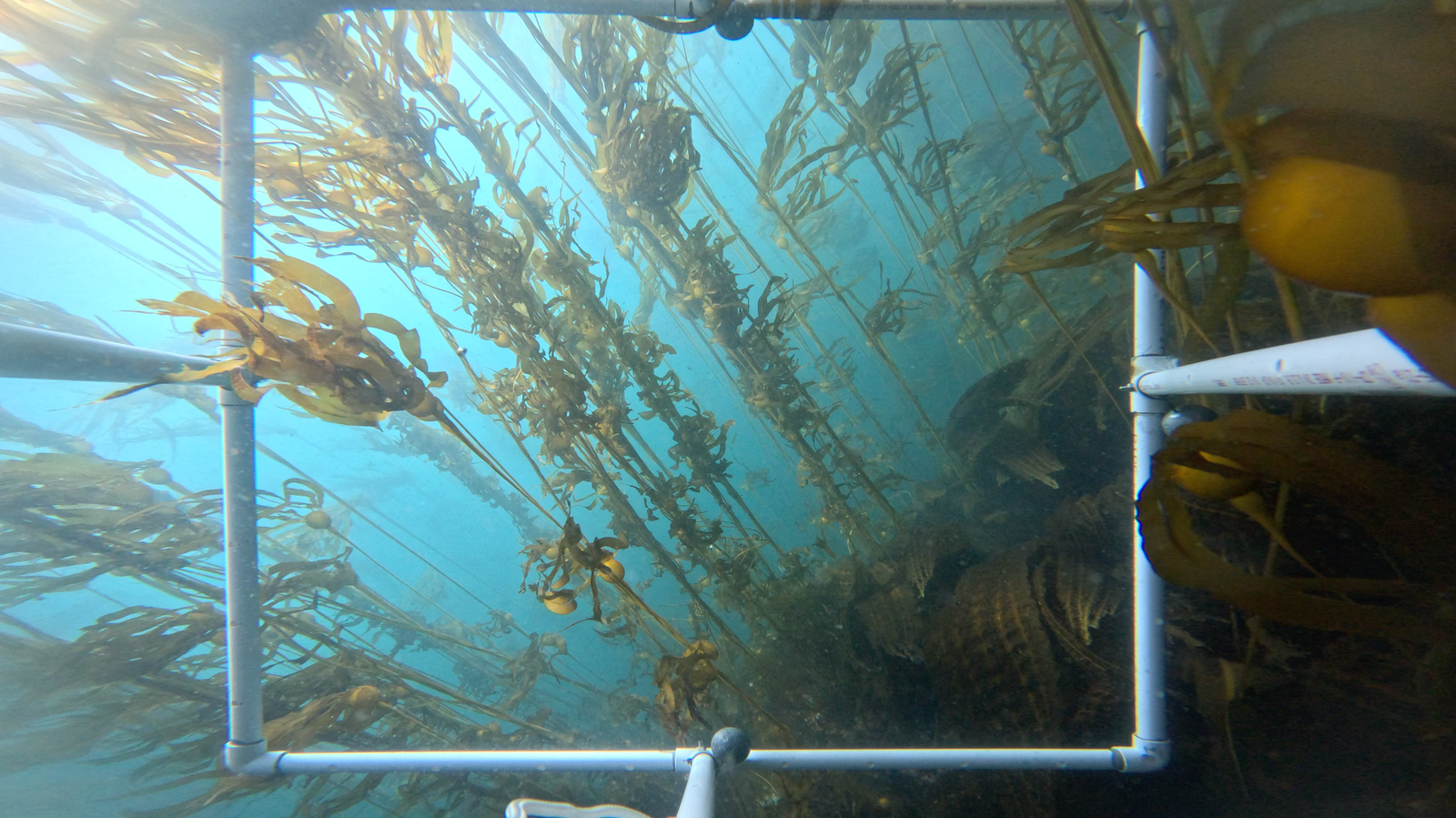
Kelp is one of the things we came to study, tracking it from pole to pole and gathering data off British Columbia, Alaska, and Chile. These underwater forests cover more of the planet than the Amazon, and they draw carbon from the water faster than trees do on land, capturing up to 20 times more per acre, and the fastest of them grow as much as two feet a day. When the first expedition sailed, the bull kelp off Northern California was thick and healthy. Then a marine heatwave between 2014 and 2016, together with an explosion of sea urchins, wiped out more than 95% of it, leaving bare rock where a forest once stood. That loss is part of a wider retreat. Worldwide, kelp has been vanishing at roughly 1.8% a year, and about 60% of its forests are now in decline. Along the Pacific coast of the Americas the heat has hit hardest at the warm edges of kelp's range, so bull kelp from central California northward and giant kelp from Baja down to Peru and northern Chile have thinned or vanished, while the colder waters toward Alaska and southern Chile have held up better. The hopeful part is that people are fighting to bring it back, clearing urchins by hand and raising young kelp in nurseries, and the first patches are returning. None of that happens without research. Decades of satellite records revealed the scale of the collapse and showed these forests had been resilient for years before they broke, and the baseline data we gather from Alaska to Chile is what tells scientists where kelp is failing, why, and where restoration has the best chance of taking hold.
Whales, gaining and losing
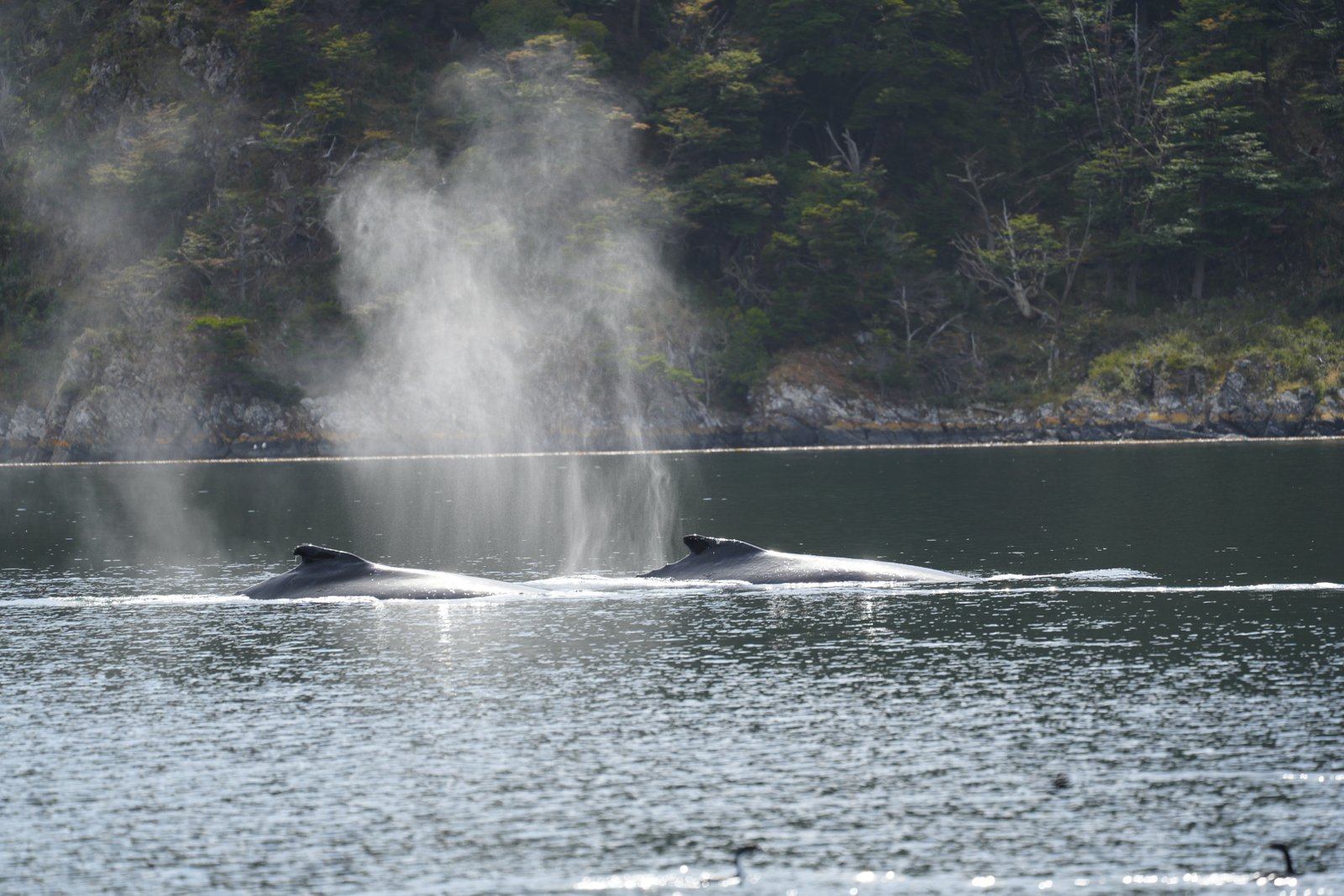
Whales gave us the most mixed logbook of all, and we are watching the latest chapter unfold at our own doorstep. The good news is real. Humpback whales, the animals at the heart of our research, have recovered so well since the whaling era that most populations are now off the endangered list. The gray whales, though, are in trouble. Since 2016 their numbers have fallen by roughly half, to about 12,900, the lowest since the 1970s, as the warming Arctic starves them of food. Thin, hungry gray whales have been wandering into the Salish Sea, the very waters where our voyage ends, in search of anything to eat. This year alone at least 30 have washed up dead on Washington's shores, about six times the normal annual average and the second worst toll in fifty years of monitoring, behind only 2019. Protection works when we choose it, and loss is real when we look away.
Plastic, everywhere we looked
There was hardly a stretch of ocean without it. When Schrader first sailed, microplastic was a word few people knew. Today the world produces more than 450 million tonnes of plastic a year, and Hawaii showed us where much of it ends up, its beaches gathering the world's drifting trash by the ton. The most telling number, though, is about us rather than the plastic. In just the four years the world spent negotiating a treaty to address it, the amount of plastic in the ocean grew by roughly 42 million tonnes, and in 2025 those talks collapsed without a deal. That matters far beyond the water, because plastic does not stay out at sea. It breaks into ever smaller pieces that climb the food chain and end up in us. It has turned up in human blood, in our lungs, and even in the artery plaque linked to heart attacks and strokes. A single piece can take centuries to break down, so almost none of it truly goes away, and with no treaty to curb production, which is set to rise by about 70% by 2040, the flood will only grow. That is why a stalled negotiation is not a distant headline. It is a decision to let a problem we can already feel in our own bodies get worse.
The ice that let us through
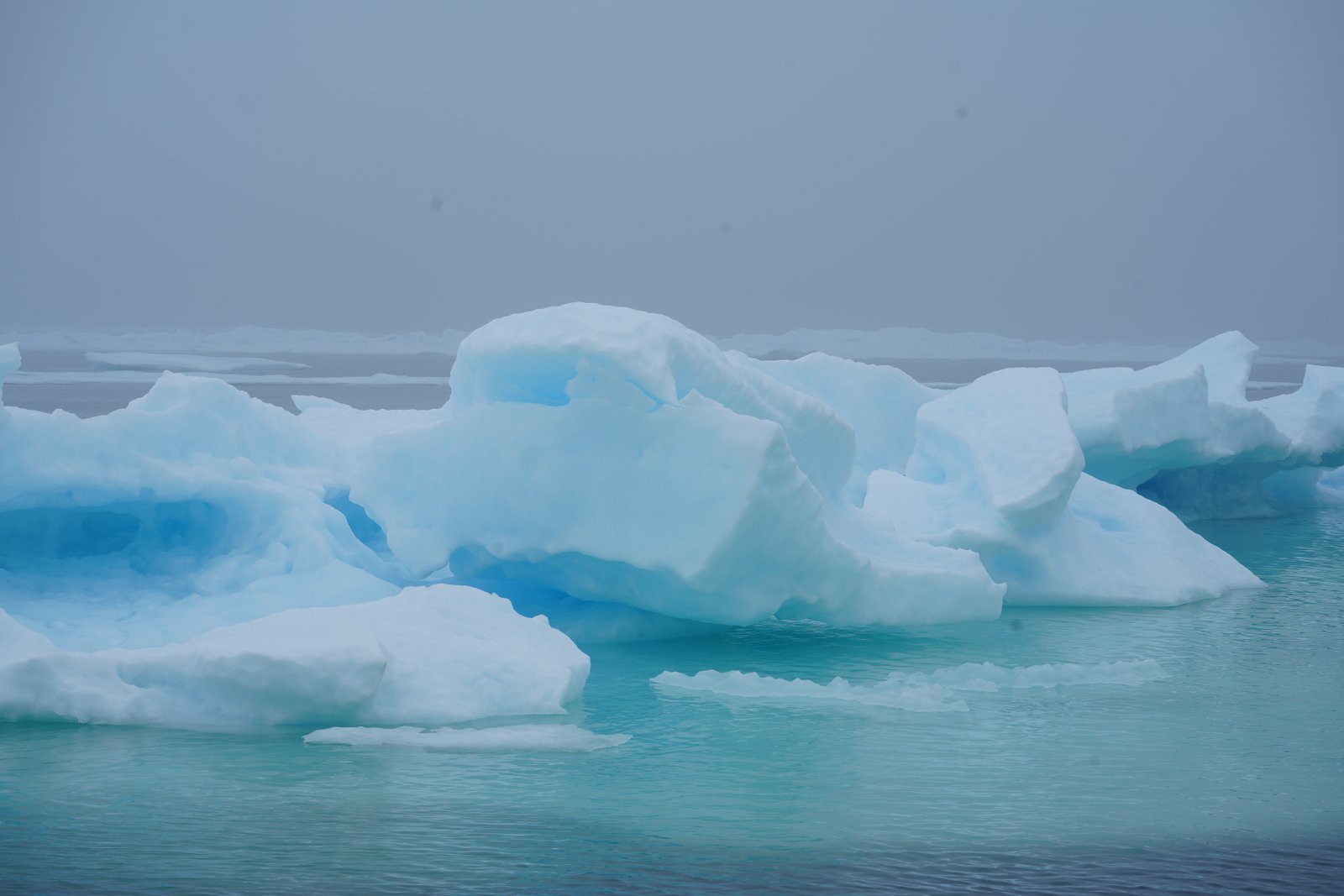
The starkest change is the one that made our route possible. The Northwest Passage runs through Arctic waters that, within living memory, stayed frozen shut, and we sailed straight through them. We still got stuck by ice here and there and had to wait it out, but this was one of the places where the fingerprints of climate change were hardest to miss, especially for Schrader, who had sailed it before and saw how much had changed. The Arctic is now warming about four times faster than the rest of the planet, and the signs are everywhere. Its summer sea ice has shrunk by roughly a third since the early 1980s, and what remains is younger and thinner. The permafrost is thawing, releasing carbon dioxide and methane and turning ground that once locked carbon away into a fresh source of it. Stronger storms are eating away at newly exposed coastlines, Greenland's ice is melting into the sea and lifting it, wildfires are spreading across the tundra, and the wildlife and Native communities that depend on the ice are being pushed to the edge, while the upheaval ripples south into wilder weather far from the poles. When Schrader first came through, his was one of only a handful of boats to make it, threading a passage that was just beginning to open. Fifteen years later we had company, part of a surge in traffic that now includes ice-strengthened cargo ships hauling freight from China to Canada straight through the passage. It is opening into a convenient shortcut, but a small sailboat rounding the top of the Americas is not a convenience to celebrate. It is a warning written in melting ice.
What is going right
For all of that, the repair is real, and we sailed straight through some of the best of it. In the Galápagos, a marine reserve created in 2022 now guards a corridor that sharks, turtles, and whales travel through the eastern Pacific. Around Hawaii lies Papahānaumokuākea, expanded in 2016, in the years between Schrader's voyage and ours, into what was briefly the largest protected area on Earth, built up by seven presidents from both parties. And while we were finishing this trip, the first treaty to protect the high seas, the two-thirds of the ocean that belong to no country, finally became law in January 2026. None of this undoes the damage. But it proves that the ocean's decline is not fate. It is the sum of our choices, and some of those choices have gone right. The rest is still ours to fight for.
The bigger picture
Nearly everything we saw traces back to the same source, to human activity, and most of all to the warming we have set in motion. That is the hard truth of this voyage. The hopeful truth is that the ocean is also our greatest ally, and it heals when we give it the chance. Fifteen years ago, Captain Schrader came home and asked people to pay attention. We are sailing home with better instruments, harder numbers, and the same request.
One island. One ocean. Fifteen years, and counting.
Sources
World Meteorological Organization, WMO confirms 2024 as warmest year on record (2025). https://wmo.int/news/media-centre/wmo-confirms-2024-warmest-year-record-about-155degc-above-pre-industrial-level
Copernicus Climate Change Service, Global Climate Highlights 2024 (2025). https://climate.copernicus.eu/global-climate-highlights-2024
Mercator Ocean International, Assessing the Ocean in 2024 (2025). https://www.mercator-ocean.eu/ocean-news/assessing-the-ocean-in-2024/
Carbon Brief, State of the Climate 2025 (2026). https://www.carbonbrief.org/state-of-the-climate-2025-in-top-three-hottest-years-on-record-as-ocean-heat-surges/
NOAA National Centers for Environmental Information, Assessing the Global Climate in 2025 (2026). https://www.ncei.noaa.gov/news/global-climate-202513
NOAA Climate.gov, Climate Change and Global Temperature (2025). https://www.climate.gov/news-features/understanding-climate/climate-change-global-temperature
International Coral Reef Initiative, the fourth global coral bleaching event (2025). https://icriforum.org/4gbe-2025/
Findlay, Feely, Jiang, Pelletier and Bednaršek, Ocean Acidification, Another Planetary Boundary Crossed, Global Change Biology (2025). https://onlinelibrary.wiley.com/doi/10.1111/gcb.70238
NOAA, Ocean Acidification. https://www.noaa.gov/education/resource-collections/ocean-coasts/ocean-acidification
Planetary Health Check 2025, Potsdam Institute for Climate Impact Research, the Ocean Acidification boundary. https://www.planetaryhealthcheck.org/boundary/ocean-acidification/
Greater Farallones National Marine Sanctuary, Kelp in Decline. https://farallones.noaa.gov/eco/kelp/decline.html
Rogers-Bennett and Catton, Marine heat wave and multiple stressors tip bull kelp forest to sea urchin barrens, Scientific Reports (2019). https://www.nature.com/articles/s41598-019-51114-y
NOAA Fisheries, Pioneering Project to Restore Bull Kelp Forests in Greater Farallones National Marine Sanctuary (2024). https://www.fisheries.noaa.gov/feature-story/pioneering-project-restore-bull-kelp-forests-greater-farallones-national-marine
Kelp Forest Alliance, State of the World's Kelp. https://kelpforestalliance.com/state-of-the-worlds-kelp-report/1-0-introduction-2/
NASA Earth Observatory, Monitoring the Collapse of Kelp Forests. https://earthobservatory.nasa.gov/images/148391/monitoring-the-collapse-of-kelp-forests
Cascadia Research Collective, early season gray whale strandings in Washington (2026). https://cascadiaresearch.org/2026-early-season-gray-strandings/
Cascadia Research Collective, Working List of Gray Whale Strandings in 2026. https://cascadiaresearch.org/working-list-of-gray-whale-strandings-in-2026/
Orca Network, Gray Whales. https://orcanetwork.org/resources/knowledge-base/gray-whales/
WWF, Global Treaty to End Plastic Pollution. https://www.worldwildlife.org/our-work/sustainability/plastics/global-plastics-treaty/
UN Environment Programme, Talks on global plastic pollution treaty adjourn without consensus (2025). https://www.unep.org/news-and-stories/press-release/talks-global-plastic-pollution-treaty-adjourn-without-consensus
Marfella and colleagues, Microplastics and Nanoplastics in Atheromas and Cardiovascular Events, New England Journal of Medicine (2024).
Stanford Medicine, Microplastics and Our Health, What the Science Says (2025). https://med.stanford.edu/news/insights/2025/01/microplastics-in-body-polluted-tiny-plastic-fragments.html
WWF and University of Newcastle, No Plastic in Nature, Assessing Plastic Ingestion from Nature to People (2019).
OECD, Global Plastics Outlook, with plastic production projected to rise about 70% by 2040 (2022).
National Snow and Ice Data Center, 2025 Arctic Sea Ice Minimum (2025). https://nsidc.org/sea-ice-today/analyses/2025-arctic-sea-ice-minimum-squeezes-ten-lowest-minimums
NOAA Arctic Report Card 2025, Sea Ice. https://arctic.noaa.gov/report-card/report-card-2025/sea-ice-2025/
U.S. Geological Survey, Permafrost Thaw, Sea-Level Rise, and Erosion Are Transforming Alaska's Arctic Coast. https://www.usgs.gov/programs/cmhrp/news/permafrost-thaw-and-subsidence-sea-level-rise-and-erosion-are-transforming
NASA Jet Propulsion Laboratory, Thawing Permafrost Adds to Near-Term Global Warming (2024). https://www.jpl.nasa.gov/news/nasa-helps-find-thawing-permafrost-adds-to-near-term-global-warming/
U.S. Naval Institute Proceedings, The Northwest Passage, Transit Realities (2025). https://www.usni.org/magazines/proceedings/2025/september/northwest-passage-transit-realities
High Seas Alliance, the High Seas Treaty and BBNJ Agreement. https://highseasalliance.org/treaty-negotiations/
NOAA Office of National Marine Sanctuaries, Papahānaumokuākea expansion. https://sanctuaries.noaa.gov/papahanaumokuakea-expansion/