
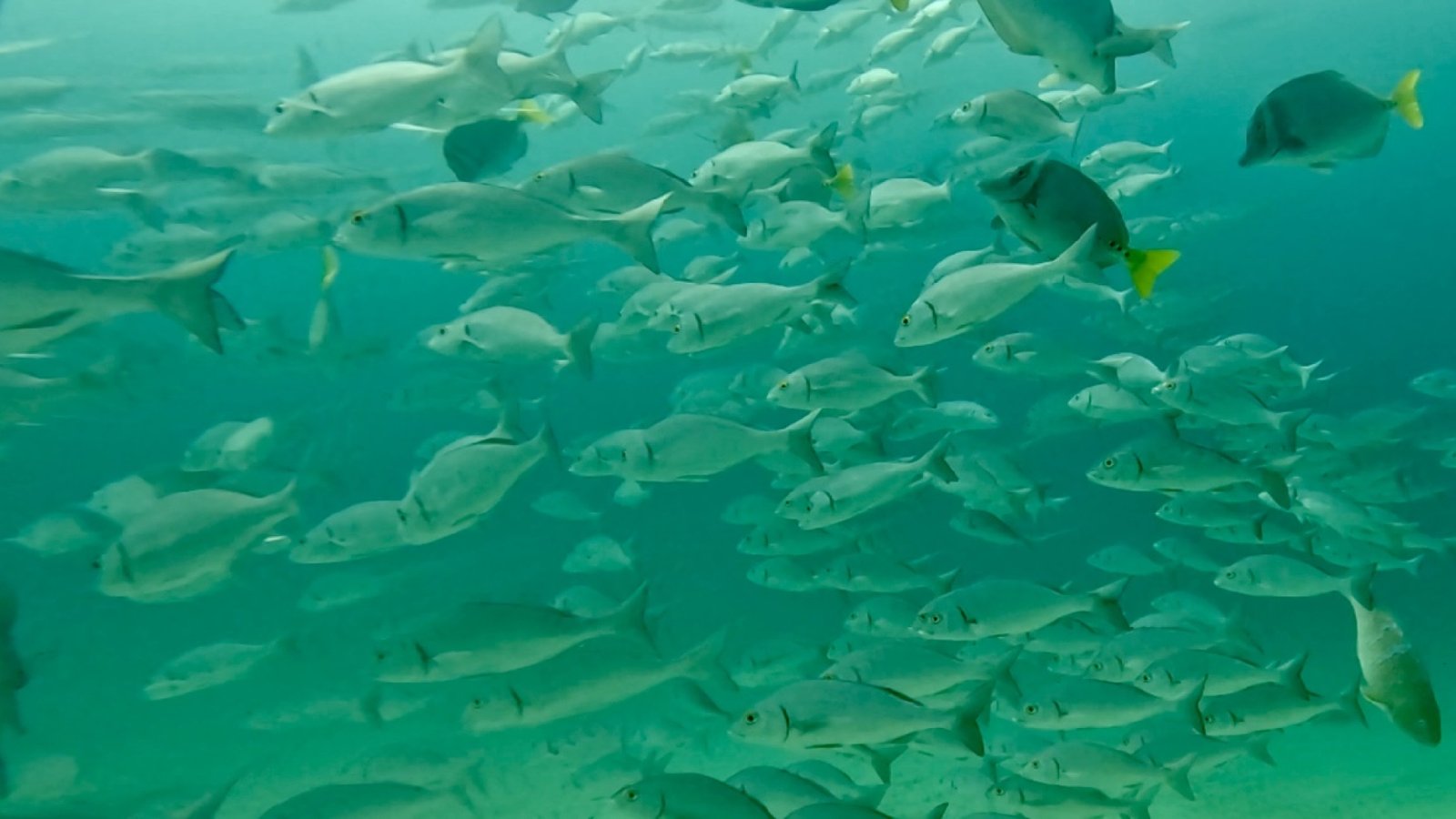
So much of this expedition has involved witnessing life on the ocean from above the surface. The Galápagos offered us a completely different perspective—deep beneath it.
The crew—Tess, Grace, Steve, and I—had the opportunity to dive off the northern end of Santa Cruz Island near Daphne Minor and Seymour Island.
Tess and Grace chose the deeper dive right off the bat. I am a certified PADI diver, but I hadn't been diving in years. Steve, a beginner and I opted for the Explorer Dive—a refresher course with an instructor. Our maximum depth would be around 30 feet, while the girls descended to more than 60.
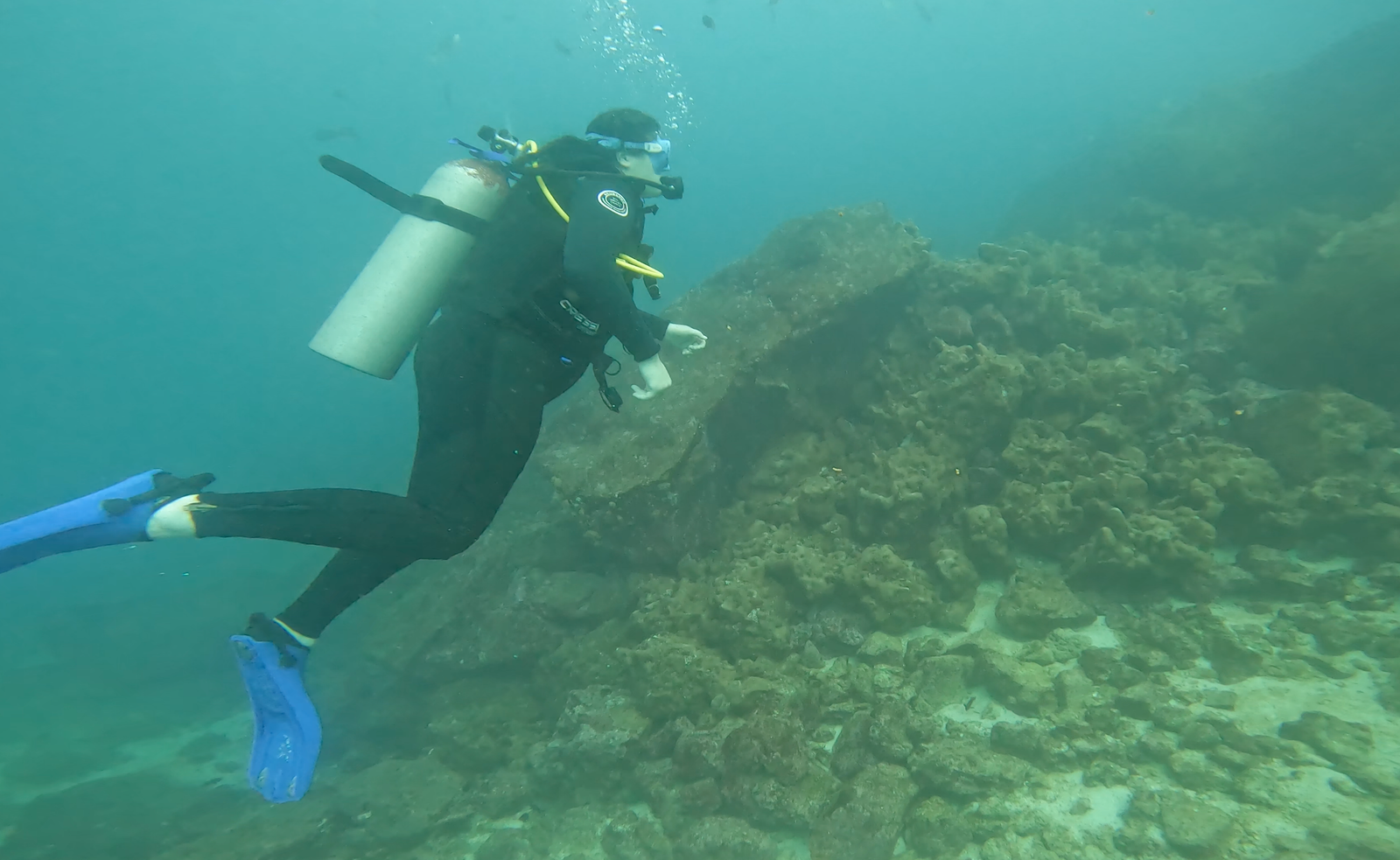
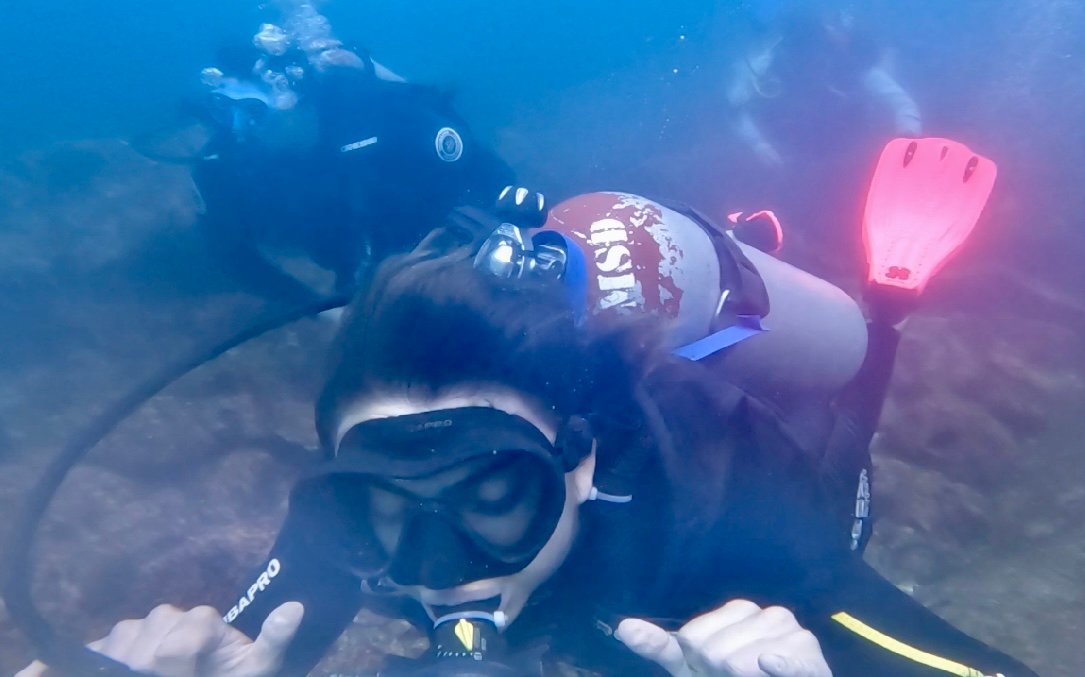
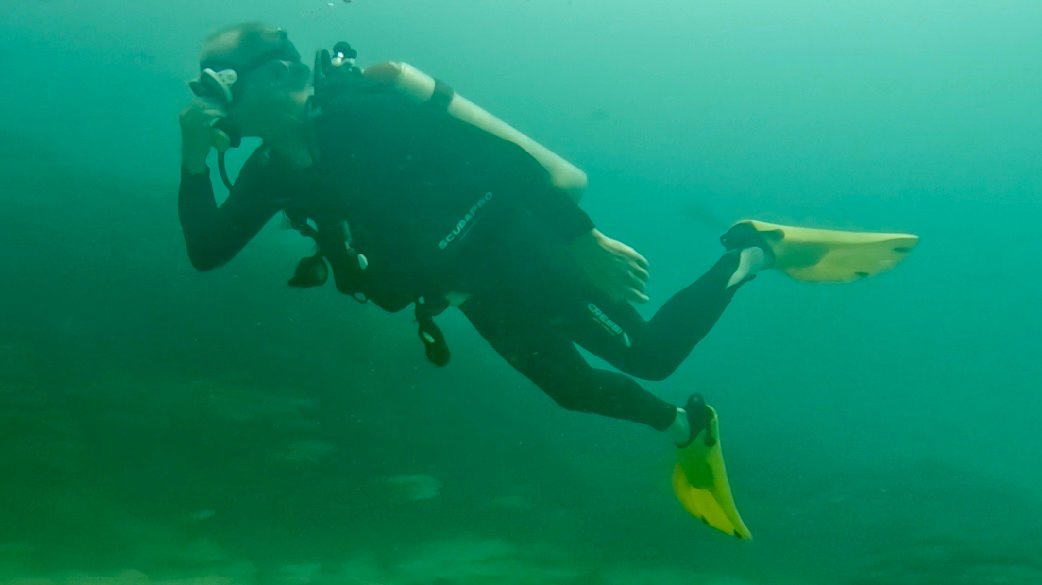
Truthfully, I wasn't sure how well I could equalize anymore. Whenever I went snorkeling, I could usually feel pressure building in my sinuses by the time I reached ten feet. Still, I decided to give it a try, carrying a healthy amount of apprehension with me.
The experienced divers suited up first and rolled backward into fairly rough water. Then it was Steve and me—the only two newcomers—sitting on the rail beside our instructor, waiting for the cue to fall backward into the sea.
The entry was surprisingly easy. The weight of the tank disappeared the moment I hit the water, and the relief from the Galápagos heat was instant. Bubbles engulfed me, and then everything became clear.
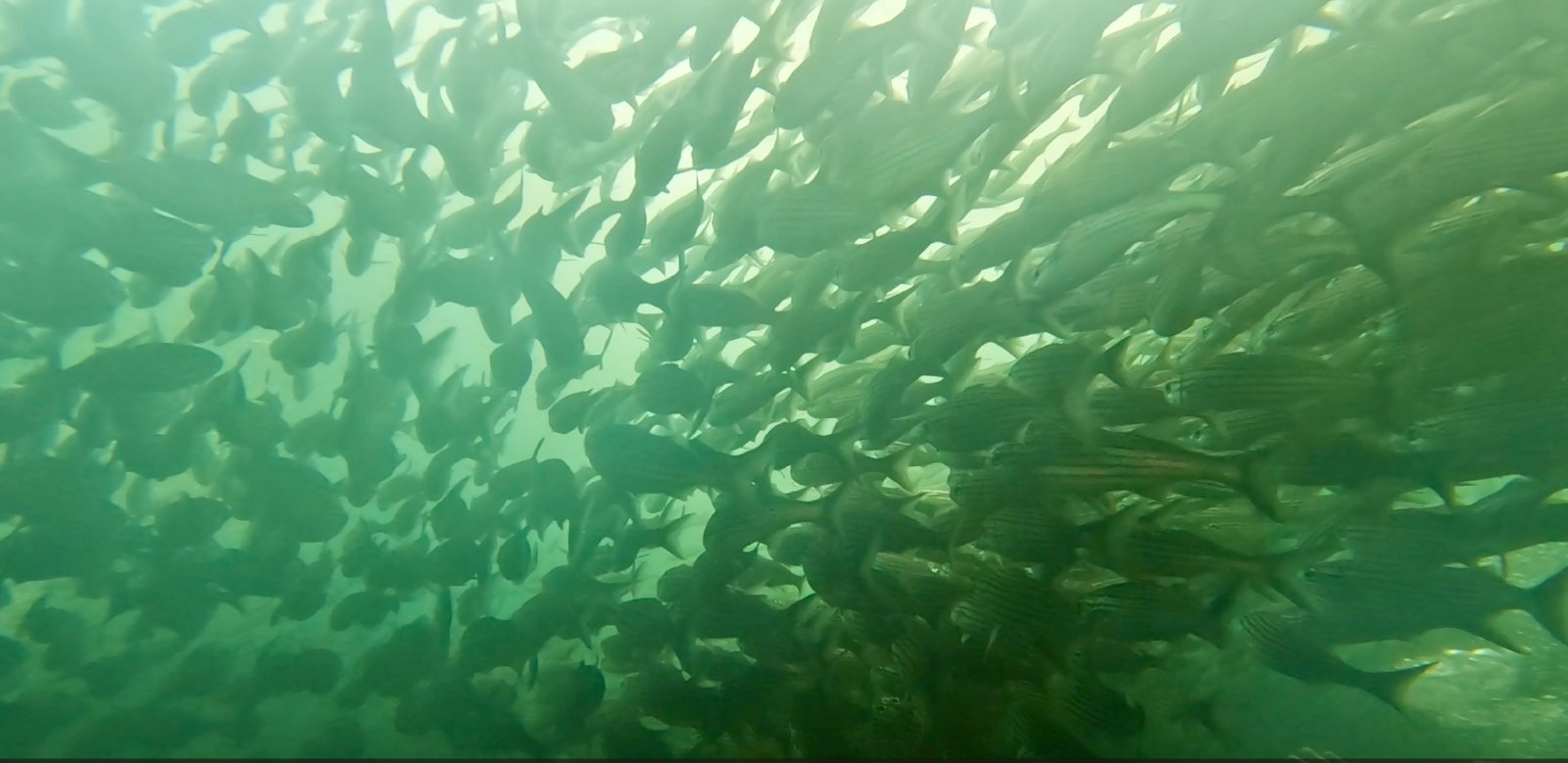
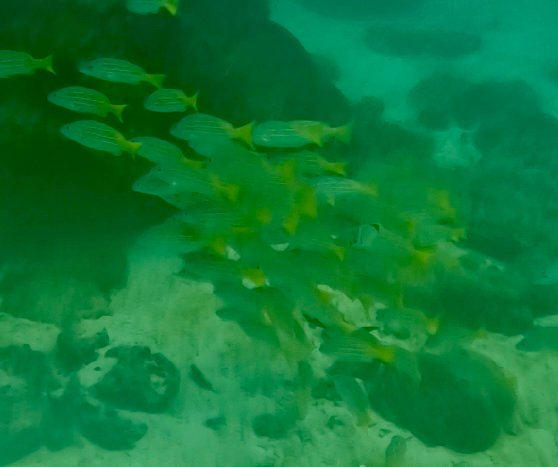
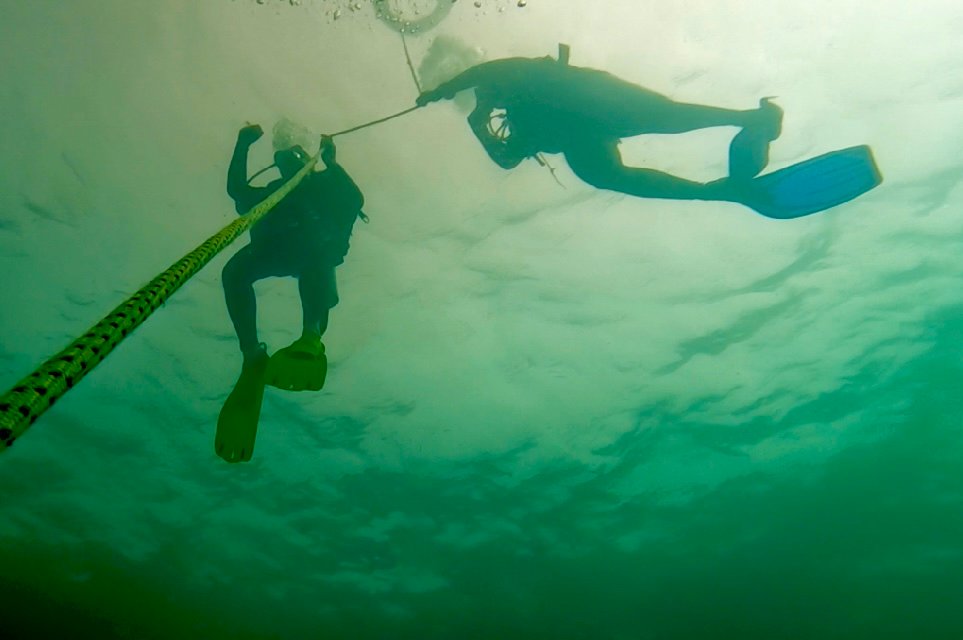
A large school of silver-and-yellow fish immediately surrounded me. None seemed bothered by my arrival in their world. After reviewing hand signals, our instructor pointed toward the descent line. I grabbed hold and sank slowly into the blue, mesmerized by the life all around me.
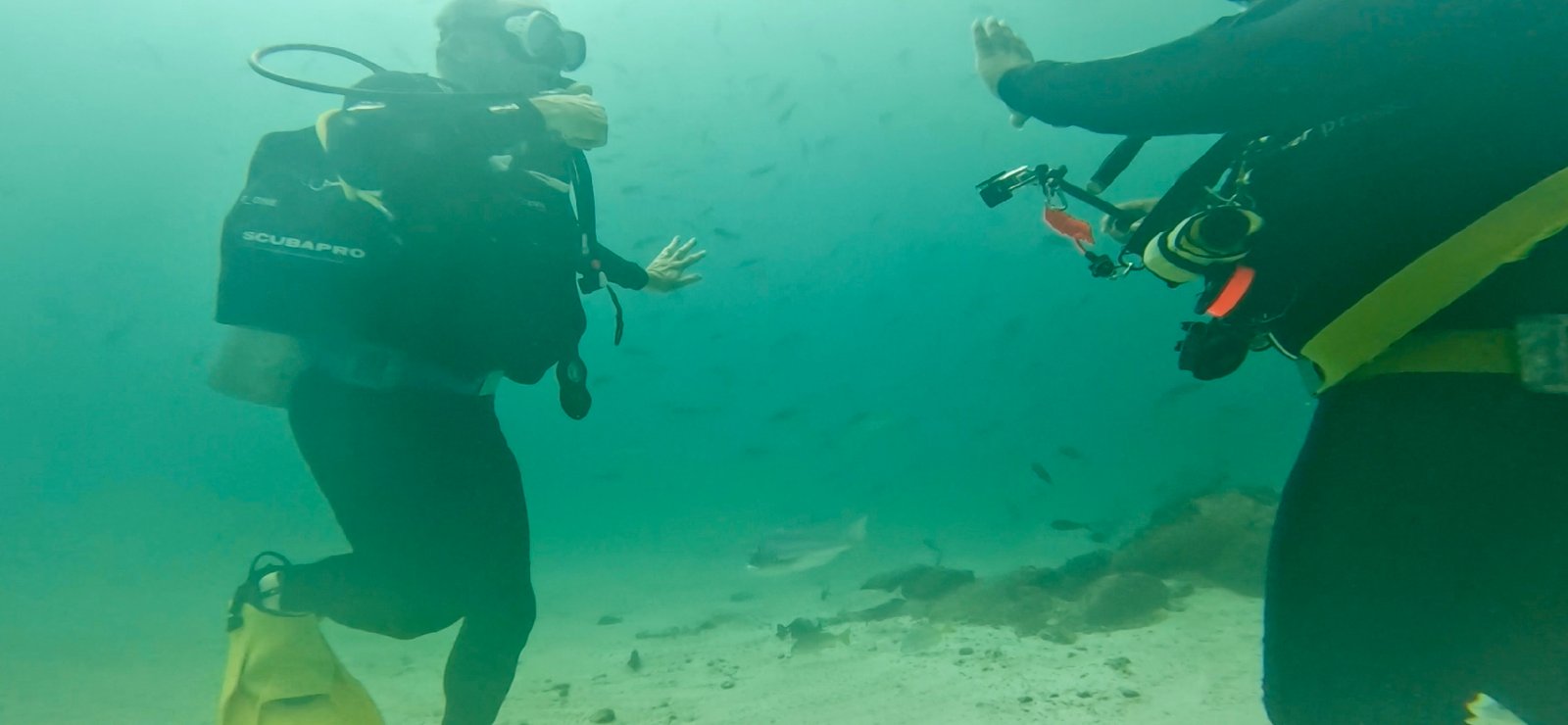
At the bottom, about 32 feet below the surface, we practiced removing and replacing our regulators. To my surprise, everything came back naturally.
I earned my PADI certification with my dad in my twenties. During one of our first dives together, a playful seal grabbed my fin and demanded what felt like a belly rub. Underwater, Dad and I exchanged wide-eyed signals of amazement and laughed about it afterward.
Now, with Alzheimer's having taken so much from him, that memory surfaced unexpectedly in the Galápagos. In a way, he was diving with me again.
Once our skills check was complete, we followed our instructor into the cerulean blue. I felt weightless and free, spiraling gently through the water.
Almost immediately we encountered a massive moray eel stretched fully out in the open.
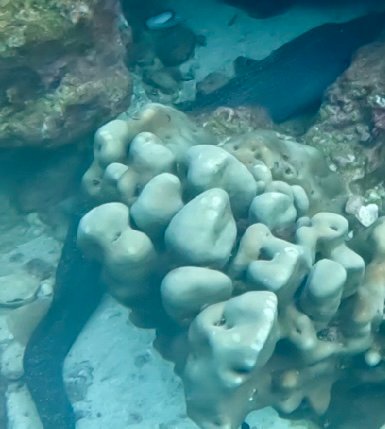
Then came thousands of Galápagos garden eels, their heads protruding from the sand like blades of seagrass, swaying rhythmically in the current. We passed giant angelfish, enormous Galápagos pufferfish, tuna, trumpetfish, and finally, white-tip reef sharks.
I had expected to feel fear when I saw my first shark.
Instead, I felt awe.
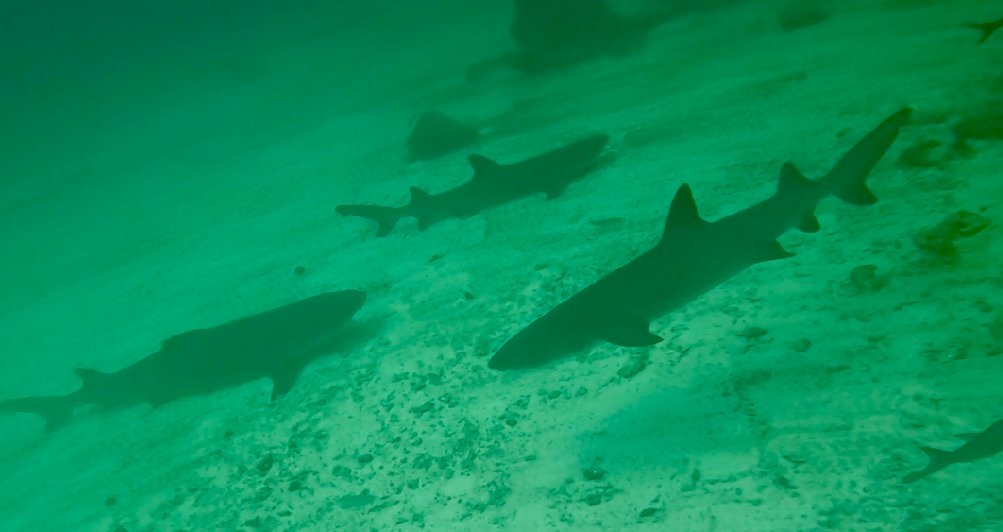
Three white-tips rested quietly on the seafloor only a few feet away. They were calm. I was calm. We simply shared the same space for a few moments, and it felt like a privilege.
About twenty minutes into the dive, our instructor signaled that Steve was having a problem. Steve calmly indicated that his heart was racing and that he felt very uncomfortable.
Together we slowly ascended to the surface, where the sea was rough and wild—so different from the peaceful world below. Steve explained that he had felt a moment of panic but was otherwise okay and simply wanted to listen to his body. Once at the surface he felt fine. The boat came alongside and helped him aboard.
After checking on him one more time, I asked the instructor if he and I could continue the dive.
He nodded, grabbed my hand, and together we descended once again.
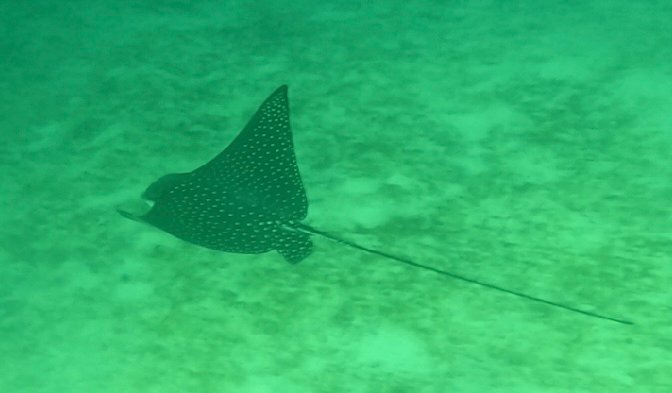
Almost immediately, four eagle rays appeared out of the blue. They glided effortlessly around us, wings undulating as they rode the current. They looked less like fish and more like birds flying through an underwater sky. We swam among them as they circled gracefully around us.
I found myself talking underwater, saying hello to nearly everything we encountered.
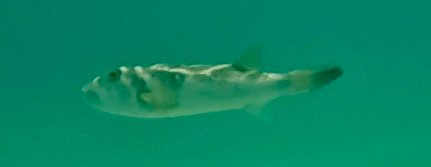
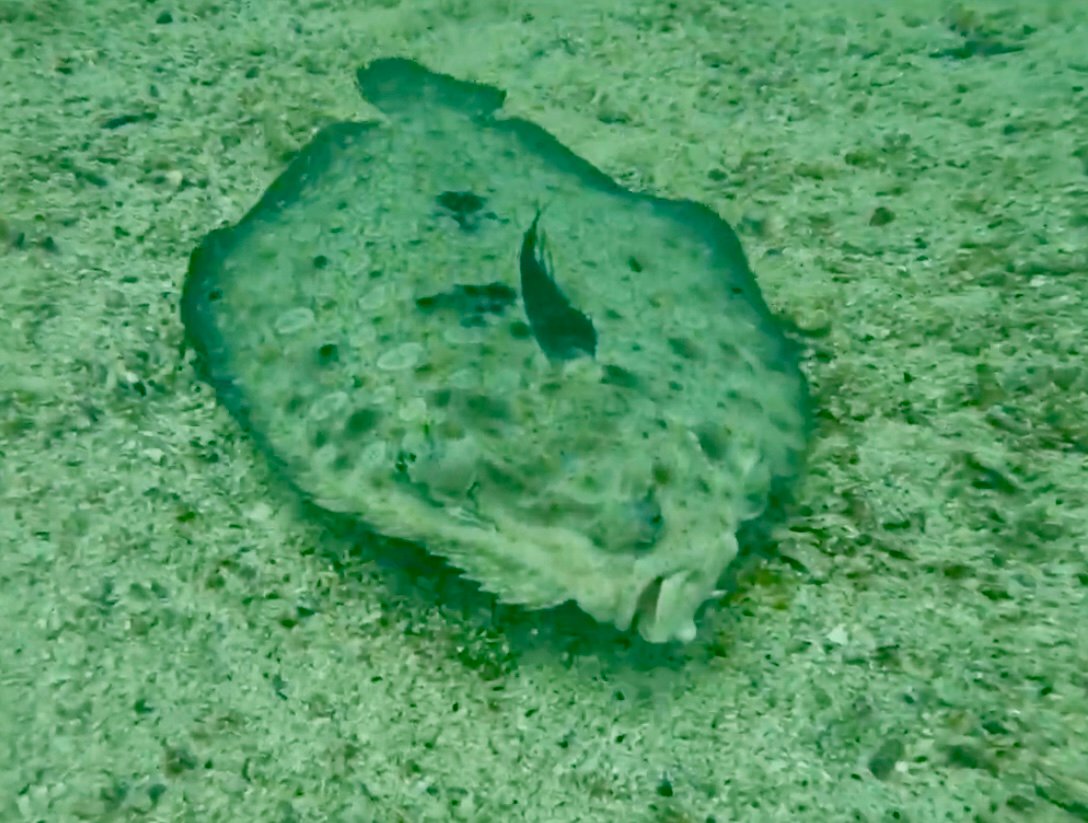
We saw more sharks, Galápagos flounders, parrotfish, and countless other species. The deeper we traveled into their world, the more I felt like a guest in a place that operated by entirely different rules. Everything moved with purpose, yet nothing seemed rushed.
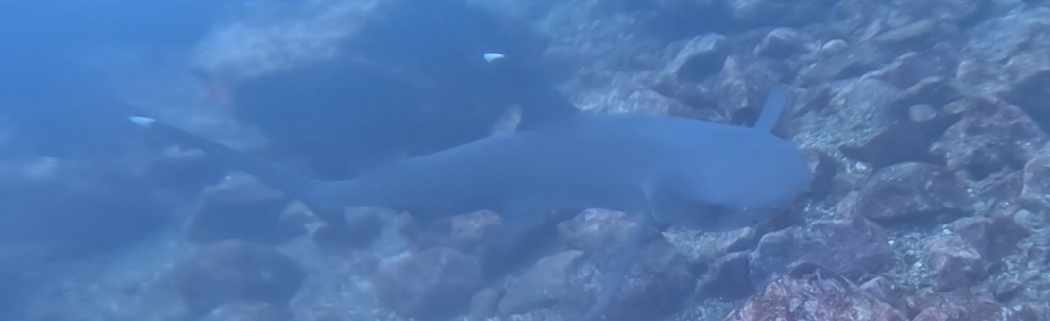
Our dive lasted about fifty minutes. When I surfaced, I let out an enormous whoop of excitement. I was the last one back aboard and was greeted by Tess, Grace, and Steve, all wearing huge smiles.
Originally, that was supposed to be my only dive of the day. At our next stop near Seymour Island, I had planned to snorkel while the others completed another dive.
But I already knew that wasn't going to happen.
I wanted back in.
The good news was that equalizing had turned out not to be a problem at all.
As we motored toward the next site, the crew shared stories over snacks while Steve, feeling much better, decided to stay aboard and enjoy the ride. I paid for a second dive and joined the more experienced group.
I was a little nervous at first, but the feeling disappeared the moment I entered the water.
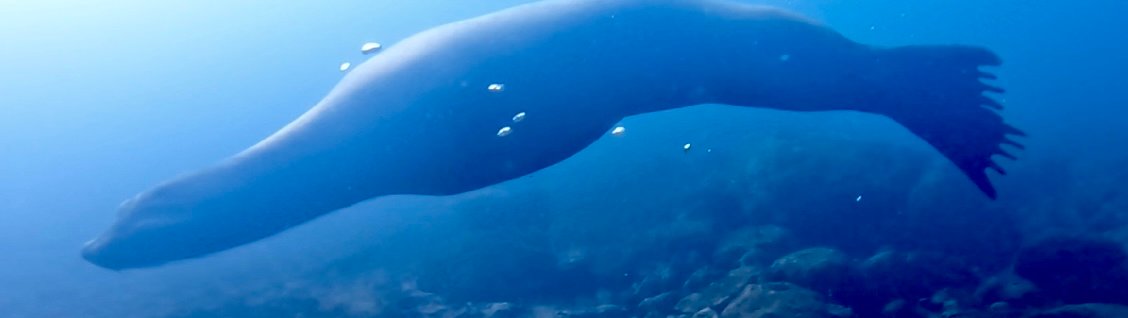
This time we followed a stepped underwater shelf downward. Before long, several sea lions appeared, darting around us like underwater acrobats. Their sleek bodies zipped past from every direction. Sometimes they stopped directly in front of our masks and floated upside down, studying us with the same curiosity we had for them.
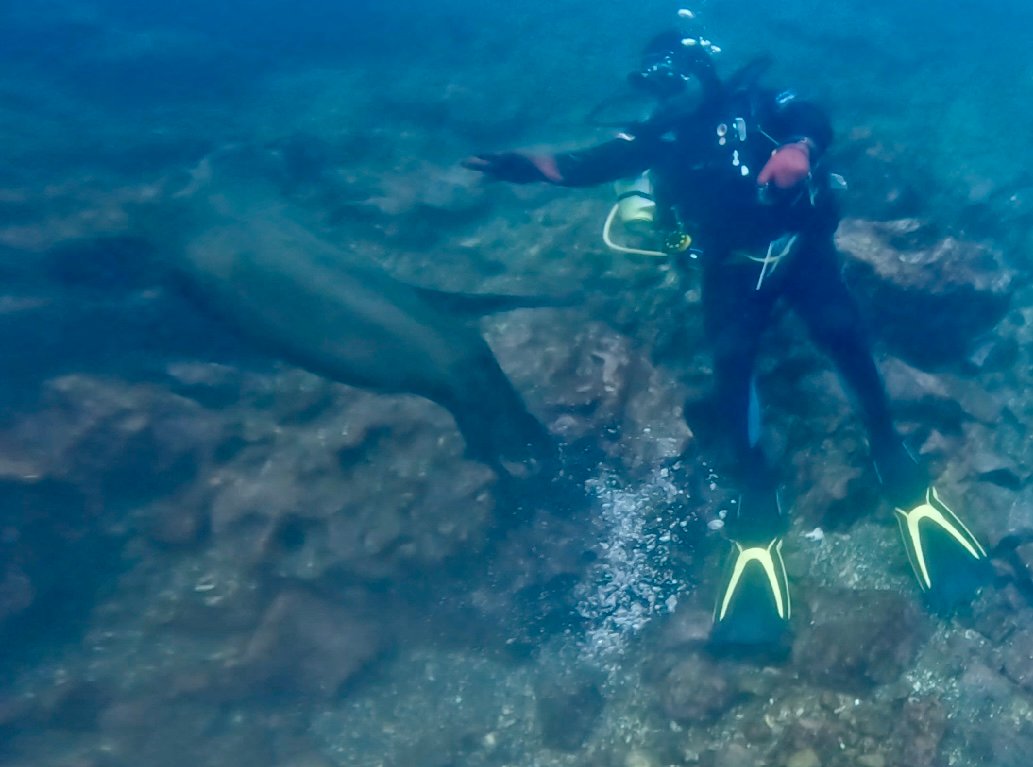
I watched my instruments as we descended—35 feet, 40 feet, then 60 feet below the surface.
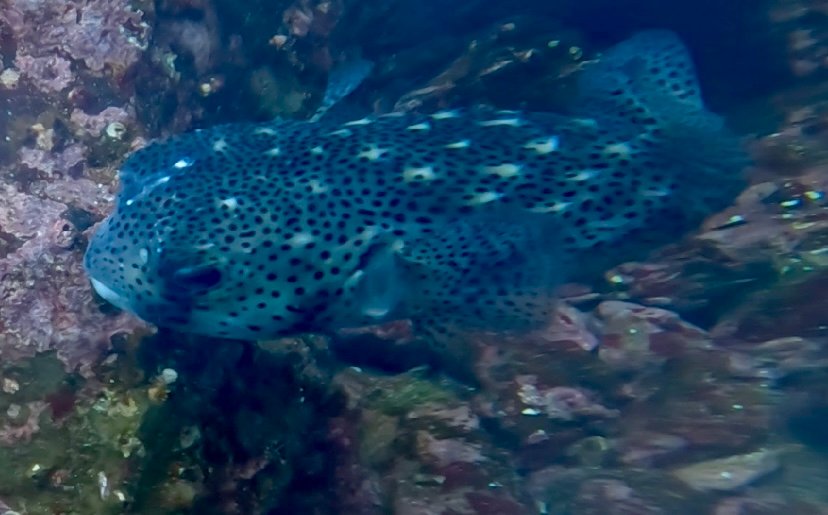
Again we encountered white-tip and black-tip sharks, schools of tropical fish stretching beyond sight, and then one of the highlights of the day: sea turtles.
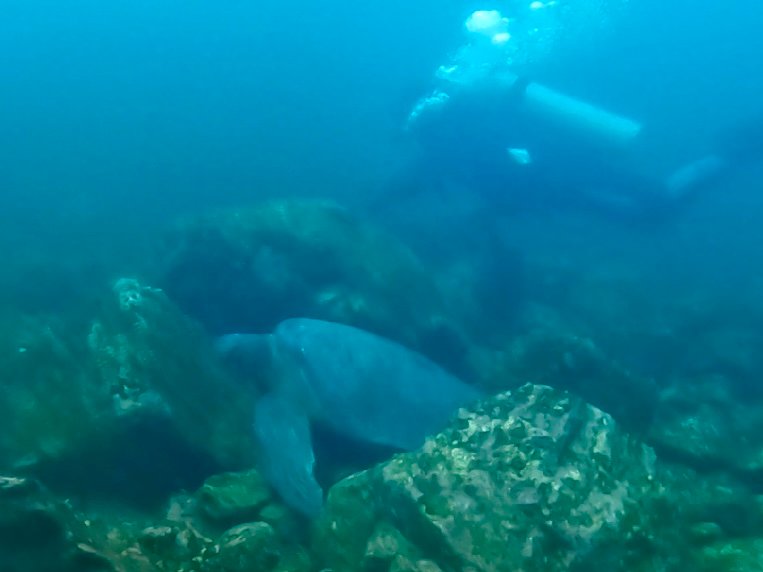
The first rested quietly among rocks, as though tucked into an underwater garden. We remained at a respectful distance while it regarded us with calm curiosity.
Then we saw another.
And another.
And another.
Some were enormous. Most seemed completely at ease with our presence. Combined with the playful sea lions, it felt as if every few minutes another wonder emerged from the murky waters.
I watched Grace and Tess swimming nearby and thought about how fortunate I was to share this experience with them. It brought me back once again to those dives with my father all those years ago.
Then came the moment I will never forget.
Ahead of us appeared what looked like a dark cloud suspended in the water.
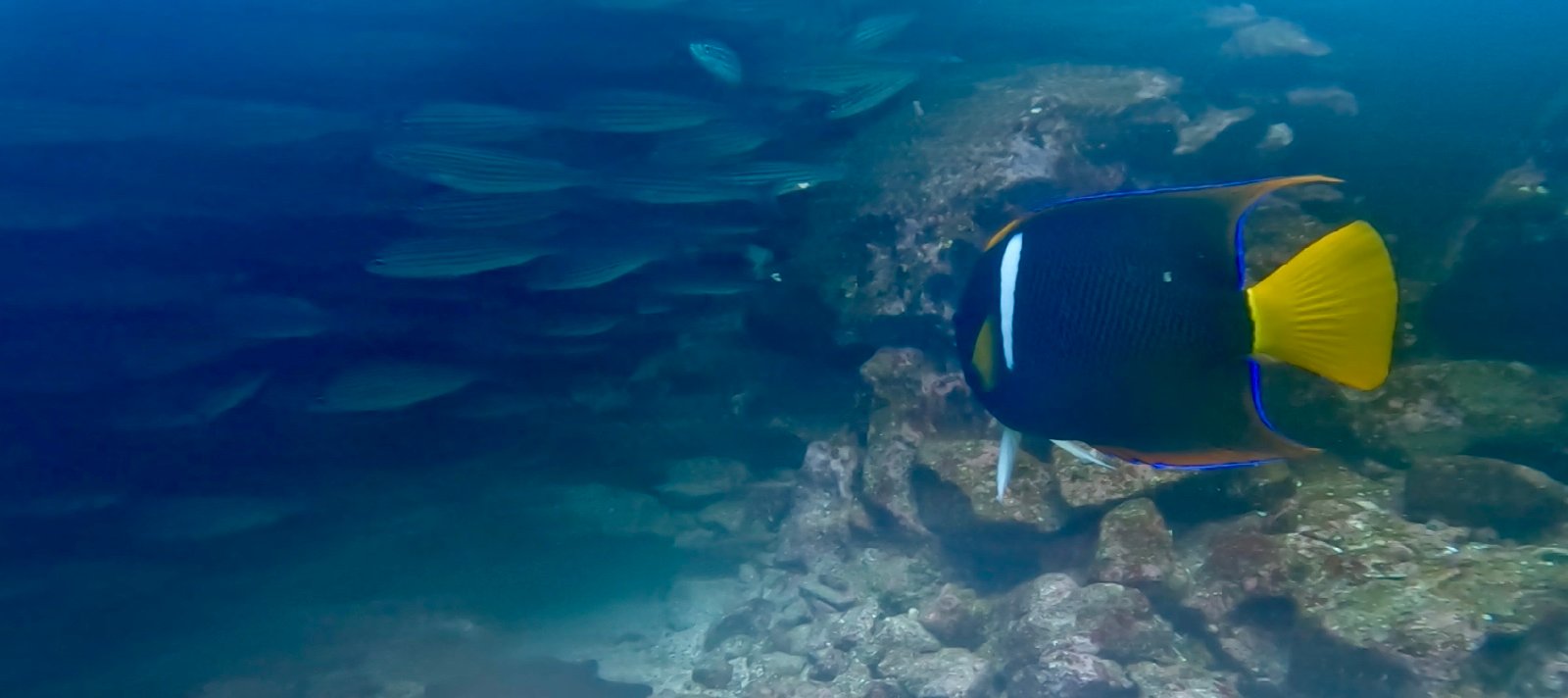
As we approached, it resolved into thousands upon thousands of silver fish packed tightly together, rotating in perfect synchronization. The bait ball moved like a single living organism, flashing silver whenever sunlight filtered through from above.
My instructor signaled for us to enter.
Every instinct told me to hesitate. After all, bait balls exist because something is hunting them.
But I followed.
We slipped beneath the swirling mass and instantly the sunlight disappeared. Fish surrounded me in every direction. Their bodies moved with impossible precision. I could see individual eyes and scales, yet somehow they all knew exactly when to turn.
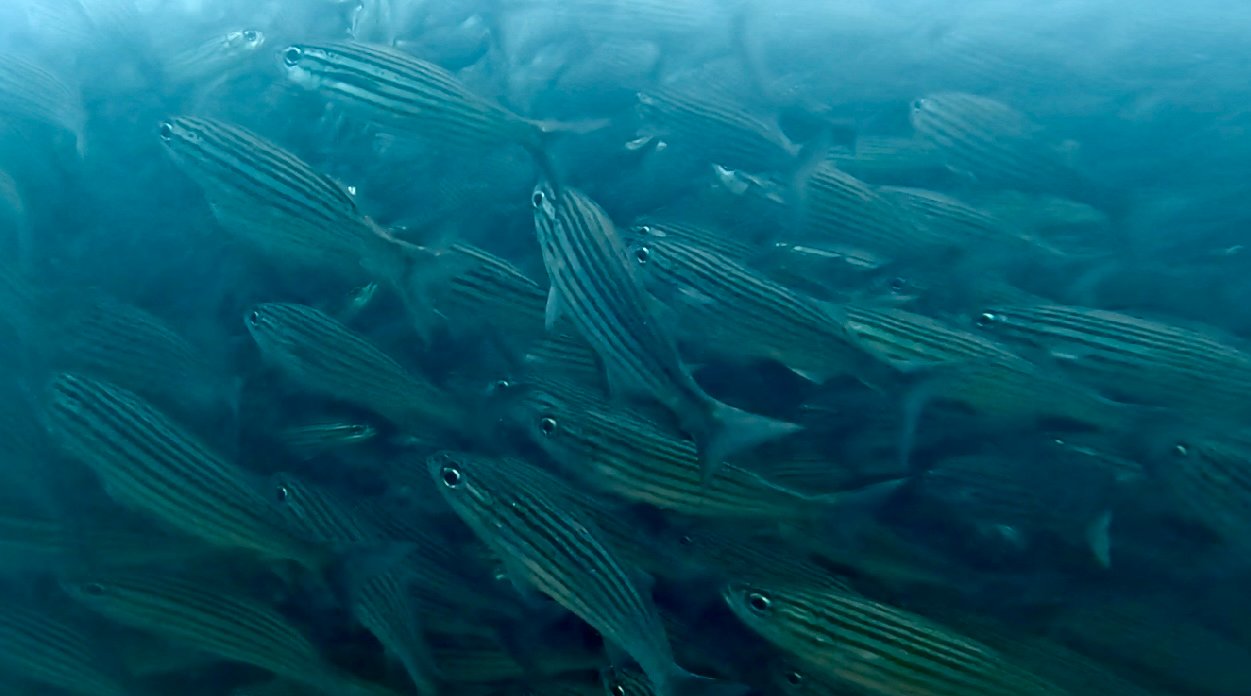
For a moment the school opened.
Beyond the silver curtain were sharks.
Then, just as quickly, the fish closed ranks again, surrounding us once more. I found myself swimming within their spinning universe, moving alongside them as though I had become part of the school.
It was one of the most extraordinary wildlife experiences of my life.
That day reminded us why we had sailed thousands of miles to reach these islands.
For months we had studied the ocean from its surface—crossing vast stretches of water, documenting wildlife, weather, and ecosystems. But beneath the surface was an entirely different universe, one filled with lives unfolding beyond our sight.
The sharks resting on the seafloor, the eagle rays gliding through the current, the sea lions twisting through the water, the turtles drifting through underwater gardens, and even the tiny garden eels swaying in the sand are all part of a world that has existed for millennia and deserves the chance to continue.
The experience left all of us with a renewed sense of purpose. The research, education, and storytelling that brought us here felt more important than ever. We came away convinced that protecting these ecosystems isn't simply about preserving wildlife; it's about safeguarding wonder itself.
I hope future generations have the opportunity to experience moments like these—to descend beneath the waves and discover a world so extraordinary that it changes the way they see the ocean forever.
Whether you see it as a gift from God, nature, or something larger than either, it is a gift worth protecting. Happy World's Ocean Day, week, month, year!